
Last updated November 16, 2026
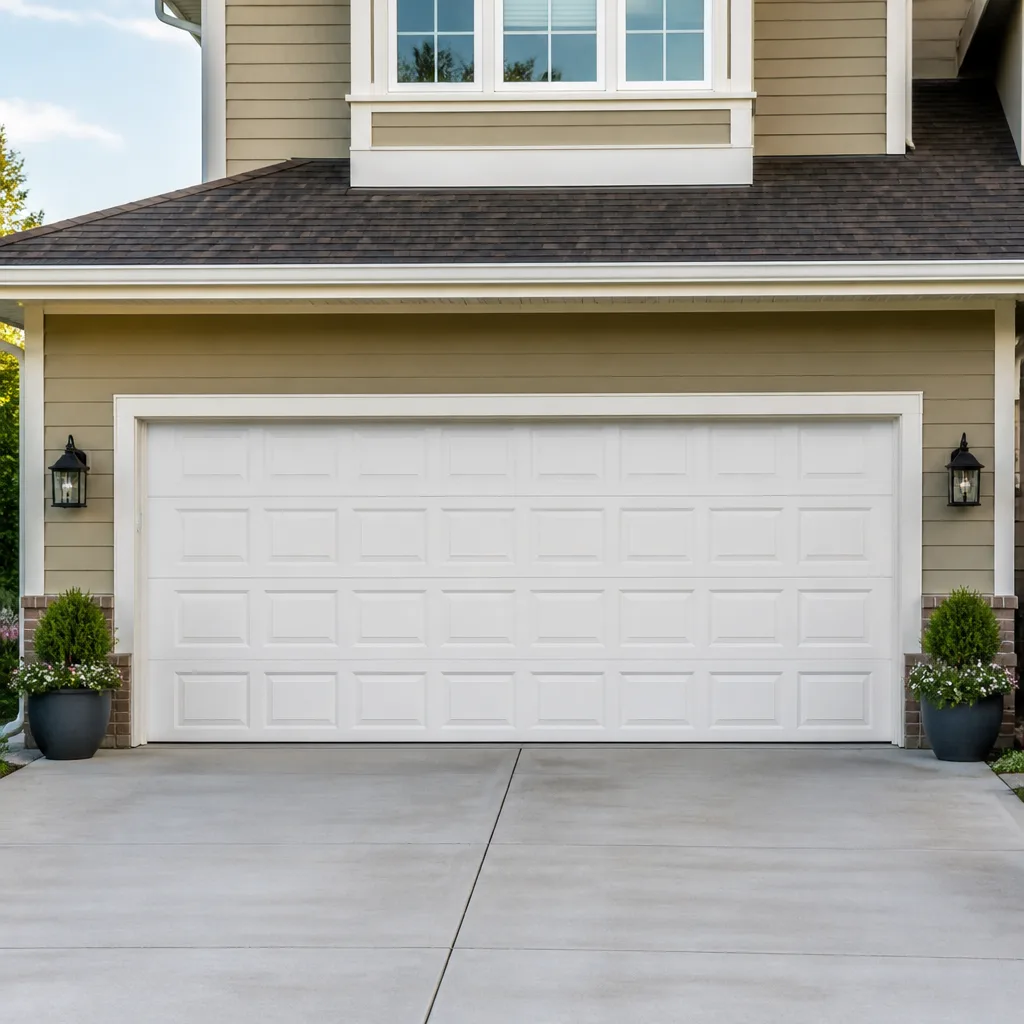 Raised-panel steel
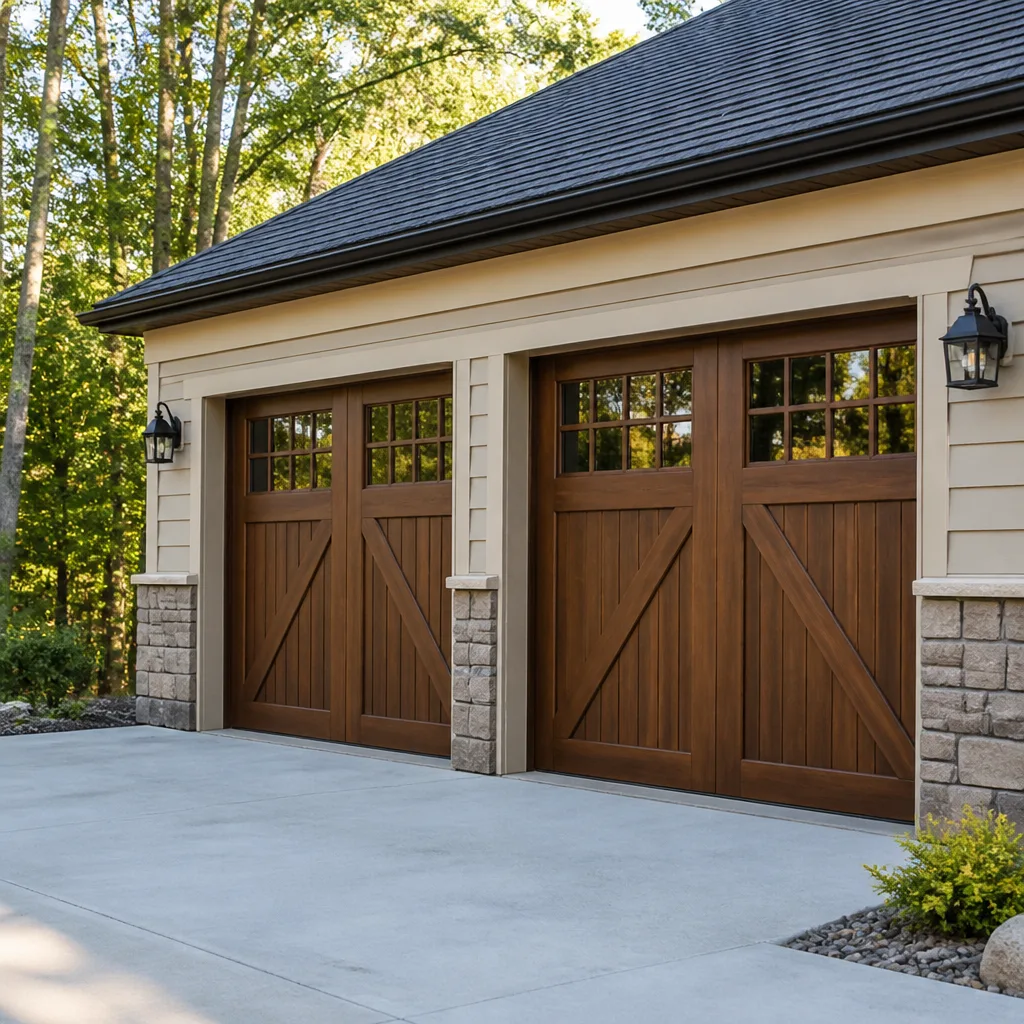 Carriage house
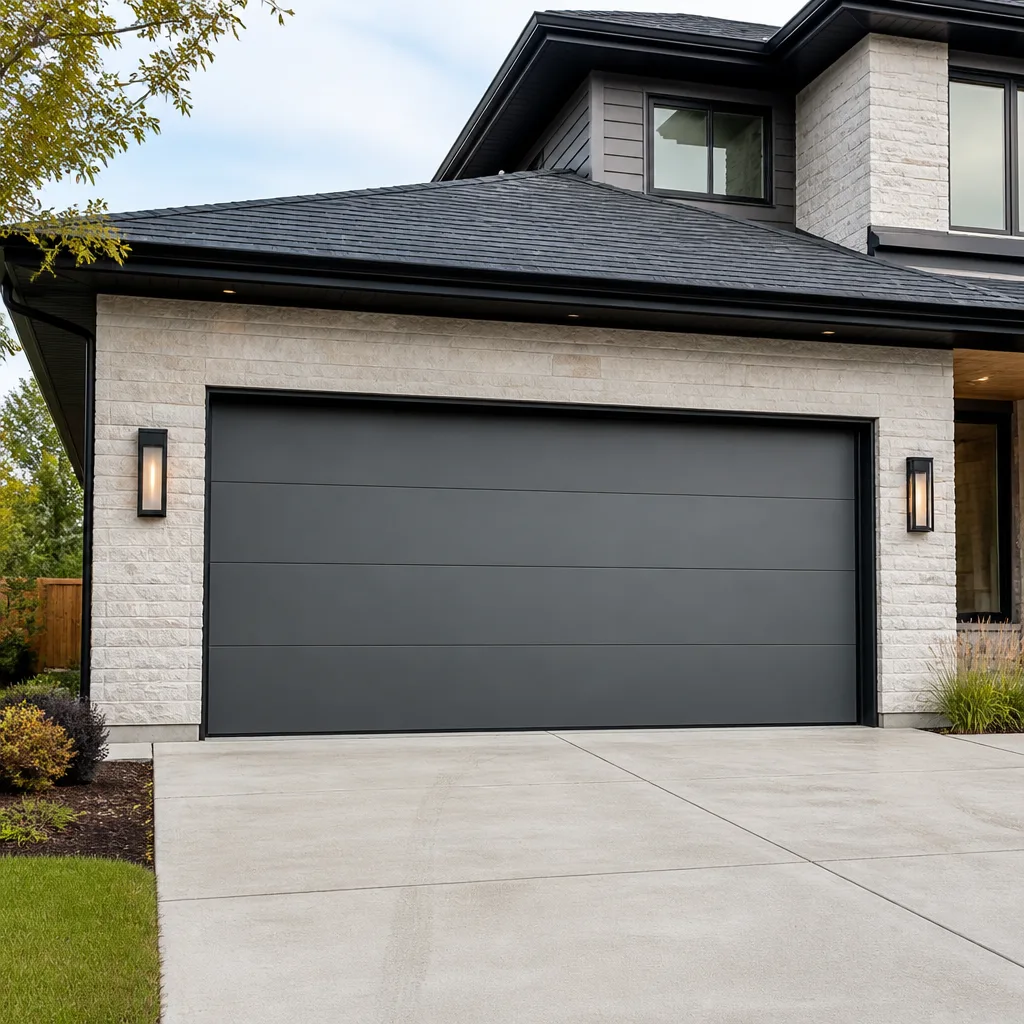 Modern flush
 Full-view glass
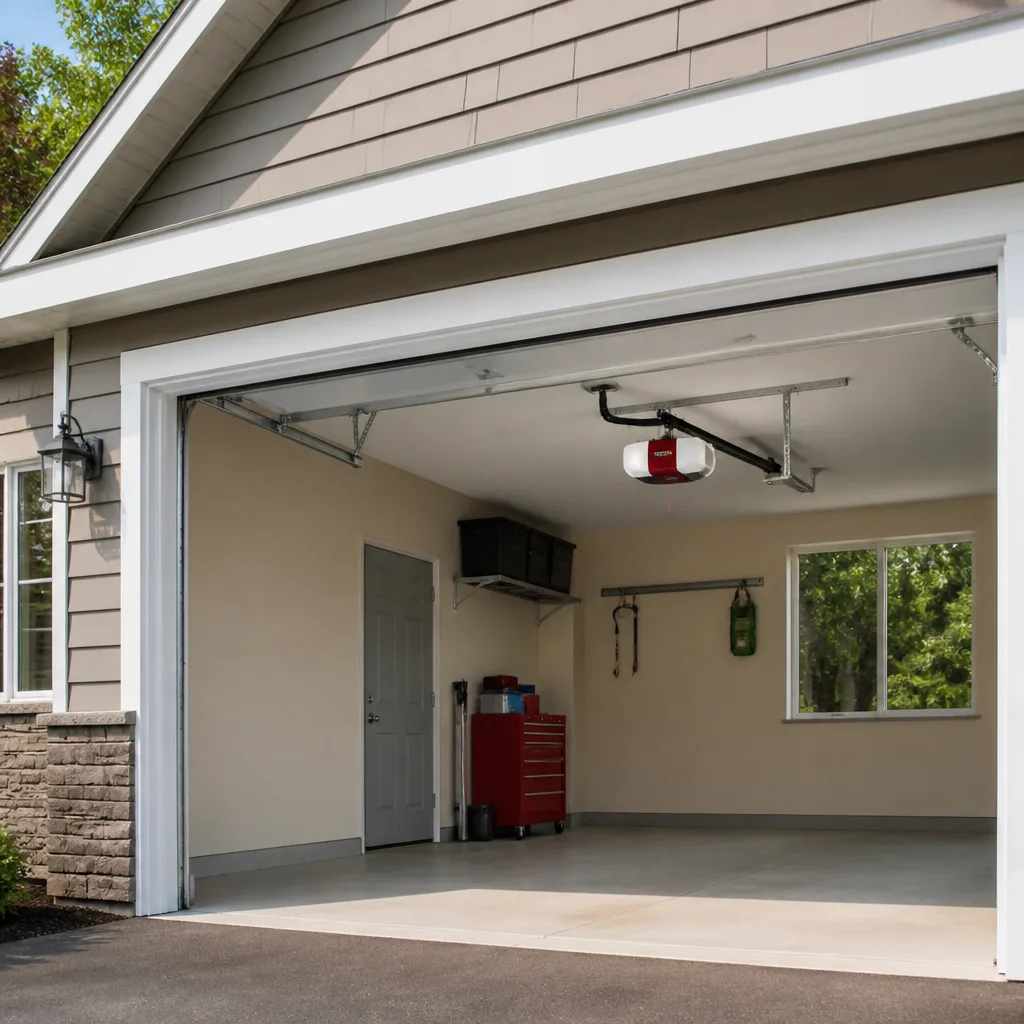 LiftMaster openers
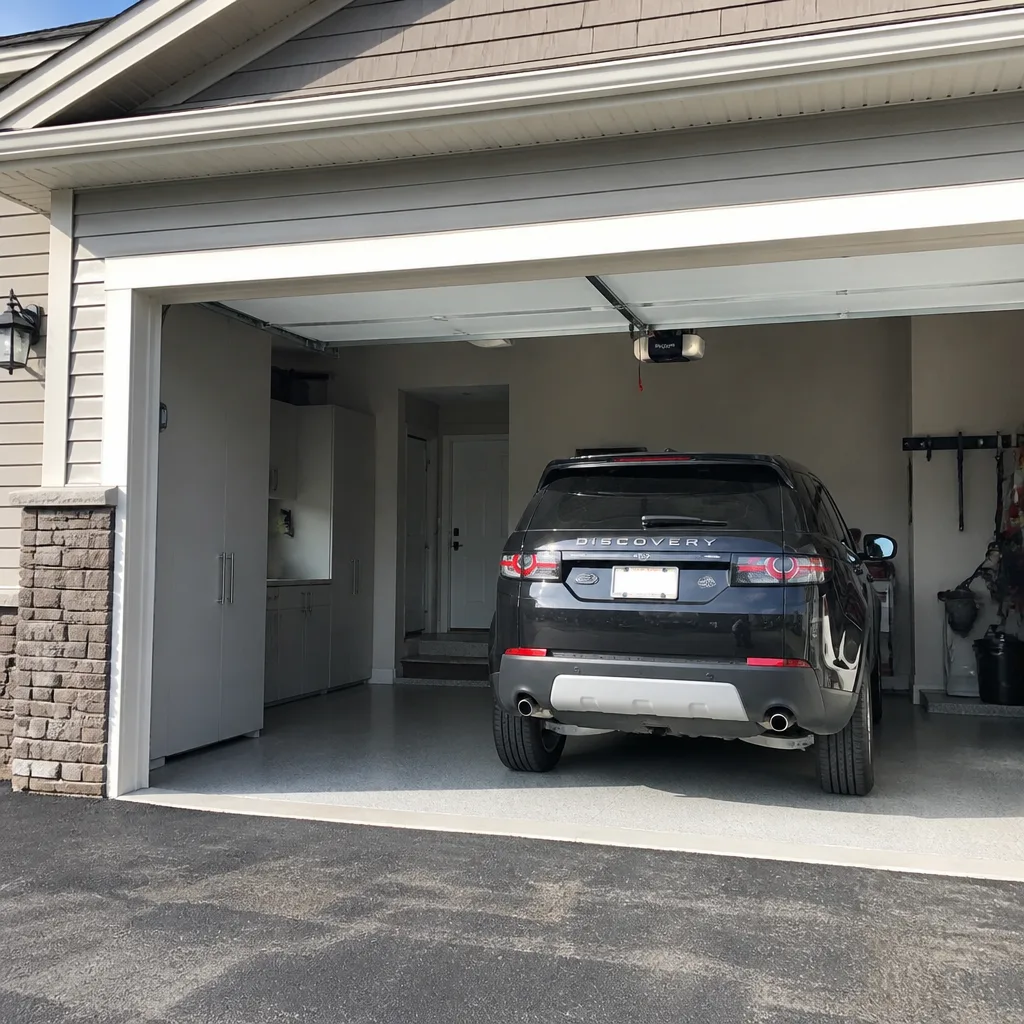 Chamberlain openers
Full 25-point door and opener safety check with every visit - springs, cables, rollers, tracks, and your LiftMaster or Chamberlain opener included
You get a price before we start. It does not change when the pro arrives.
Get your free estimateDIY vs Professional Garage Door: The South Fulton Homeowner’s Decision Guide
Most homeowners who get hurt working on a garage door were not reckless. They were careful, they watched the video twice, and they understood the theory. The problem is that a torsion spring wound to tension holds enough stored energy to break a wrist or worse in a fraction of a second, and it gives no warning before it lets go. That is not a skill gap. It is a physics gap, and no amount of confidence closes it. The useful question isn’t “can I do this myself?” It’s “which of these jobs can I safely do myself, and where does the line actually sit?” This guide draws that line task by task for South Fulton homeowners, with the mechanical reason behind each call, so you spend money only where it protects you.
Quick Answer
Some garage door work is genuinely DIY-appropriate: lubrication, safety-sensor alignment, remote and keypad programming, and visual inspections. Anything involving the torsion spring, cable tension, or track realignment is not, because those components store energy that can injure you instantly and without warning. If a job touches the spring or the cables, call a trained technician. Call (833) 612-7942 for a free estimate. We answer 24/7, with fast dispatch from 7am to 7pm, Sunday through Friday.
Styles & brands we work with
- Raised-panel steel
- Carriage house
- Modern flush
- Full-view glass
- LiftMaster openers
- Chamberlain openers
Table of Contents
- Why the DIY Decision Is Really a Risk Decision
- Task by Task: What’s Safe to Do Yourself in South Fulton
- The Spring Problem: Why Video Tutorials Build False Confidence
- The Real Cost Comparison, Including Tools You’d Have to Buy
- What Georgia Homeowners Insurance Covers After a DIY Repair Goes Wrong
- The Legitimate DIY Maintenance Routine That Extends Door Life
- How South Fulton Weather Affects Your Door and Your Repair Plan
- How to Diagnose Your Door Before You Decide Anything
Why the DIY Decision Is Really a Risk Decision
Most conversations about DIY versus professional garage door work start with money. That framing misses the point. The jobs on a garage door split into two different categories: tasks where a mistake costs you time and a small amount of money, and tasks where a mistake costs you a finger, a wrist, or a trip to the emergency room. Those categories don’t overlap, and skill doesn’t move a job from one to the other.
A torsion spring is a tightly wound coil of steel that counterbalances the weight of the door. When it’s at operating tension, it stores enough energy to move a door that weighs well over a hundred pounds, and it holds that energy every second the door is closed. A torsion spring that fails under load releases that energy all at once. Professional technicians treat springs and cables with a level of caution that surprises most homeowners, and that caution is not theater. It reflects what the components actually do when they’re under tension.
Contrast that with a photo-eye sensor that’s out of alignment. The sensor is a low-voltage device. You can adjust its bracket with a screwdriver and a level, watch the indicator light come on, and know within seconds whether you got it right. If you don’t, you try again. No stored energy, no injury risk, no real cost.
That contrast is the whole decision. Once you can look at a garage door task and say “this one has stored energy in it” or “this one doesn’t,” you’ll never waste money on a service call you didn’t need, and you’ll never put yourself in front of a spring because a tutorial made it look manageable.
Task by Task: What’s Safe to Do Yourself in South Fulton
Here’s the practical split. Anything in the first group you can handle with basic tools and a little patience. Anything in the second group should go to a technician, not because you can’t learn it, but because the failure mode is injury rather than inconvenience.
Legitimate DIY tasks
- Lubricating hinges, rollers, and tracks. A garage-rated lubricant on the moving metal parts quiets a noisy door and slows wear. No stored energy, no adjustment risk.
- Aligning safety sensors. If the door reverses for no reason, the photo-eye brackets are usually bumped out of line. Straighten them so the indicator lights stay solid, and test with an object in the beam.
- Programming remotes and keypads. Every opener has a learn button and a pairing sequence. This is a manual-reading task, not a mechanical one.
- Replacing the opener’s battery backup or a dead remote battery. Simple, safe, and quick.
- Visual inspection. Look at the cables for fraying, the springs for gaps, the rollers for flat spots, and the panels for bends. Noticing something is wrong is always safe. Fixing the spring is not.
- Clearing obstructions and tightening the occasional bracket bolt. If you’re not loosening anything under tension, you’re fine.
Tasks that require a trained technician
- Torsion spring replacement. The winding process puts the technician directly in the spring’s release path. There’s no safe way to learn this on your own door.
- Extension spring replacement. Lower tension than torsion, but still enough stored energy to cause serious injury. A spring that snaps can travel.
- Cable replacement or rewinding. A loose cable whip is fast and can cut. Cables also carry load and must be wound correctly and evenly.
- Track realignment. Tracks are load-bearing. Bending them back by hand can pull the door off balance, and it’s easy to make a small misalignment into a larger one.
- Panel replacement. The panel is heavy, awkward, and connected to a system under tension. This is a two-person job with the right equipment, not a ladder project.
- Opener replacement or logic board and gear work. Electrical work, plus load calibration. A mistake can damage the new unit or leave the door operating unsafely.
If you’re not sure which column your problem belongs in, stop there. A technician can tell you over the phone whether it’s a DIY job or not, and that’s a free call. We work on Amarr, Wayne Dalton, Craftsman, and Raynor systems, among others, so we can usually diagnose by the brand and symptom alone.
The Spring Problem: Why Video Tutorials Build False Confidence
Spring replacement videos are the single most misleading piece of garage door content on the internet. They show the procedure cleanly. A technician sets two winding bars in the cones, counts turns, works the bars in sequence, and the spring is done in twenty minutes. What the video doesn’t communicate, and can’t, is what happens when a winding bar slips at full tension.
At full tension, the bar is your only contact point with the spring. If it comes out of the cone, the spring unwinds instantly and the bar becomes a projectile. There’s no gradual failure, no sound cue, no chance to react. That’s the difference between a spring job and every other home repair project: most mistakes give you a warning, and this one doesn’t.
Videos also compress time and hide the judgment calls. Experienced technicians know how to feel when a spring is binding, when a cone is seated wrong, and when the door needs to be rebalanced after the new spring goes on. Those are things you learn by watching someone who’s done it hundreds of times, and they aren’t in the video, because they’re hard to film and harder to explain.
In our experience, the calls that come in after a homeowner has tried a spring job themselves fall into two groups. One group stopped in time, realized the tension was more than they expected, and called before anything went wrong. The other group is why we take this position. If you’re in the first group, call (833) 612-7942 and we’ll finish it correctly. If you’re considering joining the second group by starting the job, don’t.
The Real Cost Comparison, Including Tools You’d Have to Buy
Here’s the part of the DIY calculation most homeowners skip: the tooling. For any mechanical job on a garage door, you need equipment you probably don’t own and won’t need again. Once you count that, the DIY math gets a lot less attractive.
What a mechanical DIY repair actually requires
- A proper winding bar set. Garage door winding bars are specific tools with a specific diameter for the cone. A screwdriver or a piece of rebar is not a substitute. Buying a set costs more than a typical service call, and renting one is rarely practical.
- A torque gauge or the equivalent feel. Winding the right number of turns matters. Without the reference point a technician has, you’re guessing, and a mis-wound spring can fail early or leave the door unbalanced.
- Cable clamps and the right cable stock. Cables are matched to the door’s weight and lift. The wrong cable is a safety issue.
- Ladders, clamps, and time. A torsion spring replacement is a two-person job in a shop setting. Solo in a garage, it’s slower and riskier.
The professional side of the ledger
A pro brings the tools, the spring matched to your door’s weight, and the experience to get it right the first time. The price is set per job by a written estimate, and that estimate is free. What you’re paying for is the diagnosis, the correct part, and the fact that someone with up to nine years of experience stands behind the work. We quote every job before a wrench comes out, so there’s no surprise on the invoice.
The honest comparison isn’t “DIY price versus service price.” It’s “DIY price plus tools plus time plus risk versus service price with a written estimate and a guarantee.” For lubrication and sensor work, DIY wins on every axis. For spring, cable, or track work, the tooling cost alone usually closes the gap, and that’s before you count the risk.
What Georgia Homeowners Insurance Covers After a DIY Repair Goes Wrong
This is the question nobody asks until it’s too late. If you attempt a garage door repair and damage the door, the opener, or your own property, will your Georgia homeowners policy cover it? The answer is usually no, and the reasons are worth understanding before you pick up a tool.
Standard Georgia homeowners policies are built to cover sudden, accidental events: fire, wind, hail, a tree through the roof. They are not designed to cover damage that results from poor workmanship or a repair attempt that went wrong. Most policies exclude faulty workmanship and the damage that flows from it, and self-inflicted damage during a repair almost always falls into that category. If you bend a track, crack a panel, or damage your opener during a DIY job, don’t count on the claim to go through. Call your agent and read your own policy before you assume anything, but the default answer in this trade is that you’re on your own.
Where insurance is more likely to help is damage from an event you didn’t cause, like a limb or a vehicle backing into the door. Even then, it depends on your deductible and your specific policy language, so it’s worth a call to your insurer before you decide whether to claim.
The practical takeaway for South Fulton homeowners: treat DIY work as uninsured work. Any task where a mistake means paying for a new door, a new opener, or a body part is a task worth handing to a professional with a written estimate. We can work with your insurer if a covered event is part of the picture, and we’ll tell you upfront if the job looks like an insurance question rather than a repair.
The Legitimate DIY Maintenance Routine That Extends Door Life
Here’s the part most homeowners miss. You can meaningfully extend the life of your garage door and reduce how often you need a professional service call, without ever touching the spring or the cables. The routine takes about twenty minutes a month, and it’s entirely safe.
The routine, step by step
- Lubricate the moving metal parts. Apply a garage-rated lubricant to the hinges, rollers, and the pivot points on the track. Don’t lubricate the track itself, and don’t use grease on the spring. A dry spring is normal.
- Test the safety reverse. Close the door on a roll of paper towels or a 2×4 laid flat. It should reverse on contact. This is the single most important safety check you can do yourself, and it takes thirty seconds.
- Check the photo-eye sensors. Look for a solid indicator light on both sensors. If one is flickering or off, realign the bracket until it stays solid.
- Listen to the door. A door that bangs, grinds, or shudders is telling you something is out of adjustment. Note it, but don’t try to fix it under load. Write down what it does and when, so a technician can diagnose faster.
- Look, don’t touch. Inspect the springs for visible gaps, the cables for fraying or slack, and the rollers for flat spots. If you see any of those, stop the DIY routine and call for a look.
- Balance test with the opener disconnected. Pull the manual release, lift the door halfway, and let go. A balanced door stays put. If it drops or rises on its own, the spring tension is off, and that’s a professional job.
Done regularly, this routine catches most problems early and keeps the door quiet and reliable. It also means that when you do need a repair, you can describe the symptom clearly, which usually shortens the diagnosis and keeps the job small. That’s the version of DIY maintenance that actually saves money in South Fulton, because it extends the time between real repairs without putting you near a wound spring.
How South Fulton Weather Affects Your Door and Your Repair Plan
South Fulton’s weather does a specific kind of work on a garage door, and knowing what to expect helps you decide which repairs are worth doing and when. The mix of humid summers, warm springs, and occasional thunderstorms that roll through the area puts more stress on the door than a lot of homeowners realize.
Humidity is the biggest culprit. Over time, moisture works on hinges, springs, and the metal track, and it accelerates wear. A door that squeaks in the spring more than usual is telling you it’s dried out or rusting. Lubrication is the fix, and it’s a legitimate DIY job. Check hinges and rollers a few times a year, especially after a wet stretch.
Storms that come through South Fulton drop debris, and a limb or a wind-blown object against the door can bend a panel or knock a track out of line. That damage is often an insurance question, and it’s the kind of job where a professional diagnosis matters, because a bent track can hide damage to the rollers and springs underneath. Hail is uncommon here, so when you hear a bang during a storm, it’s usually debris, not hail damage.
Temperature swings also affect the door’s balance. A door that worked fine in spring can feel heavy or drop faster in a cold snap. That’s the spring system telling you something is off, and it’s the point where a maintenance check is smarter than waiting for a failure. If you notice a change, call for a look before it becomes a repair.
How to Diagnose Your Door Before You Decide Anything
Before you decide whether a problem is a DIY job or a professional one, spend five minutes narrowing down what’s actually wrong. A clear diagnosis is worth more than a toolbox here, because it tells you which column the job belongs in.
- Does the opener run but the door doesn’t move? That usually means a broken spring, a snapped cable, or the manual release is pulled. All three are professional territory.
- Does the door reverse for no reason? Check the photo-eye sensors first. If alignment doesn’t fix it, the opener’s travel or force limits may need adjustment, which is a technician call.
- Is the door noisy? Squeaks and grinds are usually lubrication and roller wear, which you can handle. Banging or a shudder under load is usually tension or track, which you shouldn’t.
- Is the door uneven? One side moving before the other points to cable or spring issues. Professional.
- Is the opener acting strange? Remote and keypad issues are usually programmable. A logic board or gear problem is a repair, and we cover garage door opener repair for both legacy and modern smart openers.
If the diagnosis lands on the spring, cable, or track, don’t try to confirm it with a wrench. Confirm it with a call. Free estimates mean the diagnosis is the technician’s job, not yours.
Common Mistakes to Avoid
- Using a screwdriver or rebar as a winding bar. The bar has to fit the cone exactly. Anything else can slip, and a slip at full tension is an injury.
- Trusting a video to teach spring replacement. The video shows the procedure, not the failure mode. What it can’t show you is the one moment that matters.
- Skipping the balance test after a repair. A door that isn’t rebalanced after a spring change will wear the opener out early, and you’ll be back where you started. This is a South Fulton problem in particular, because the temperature swings here make an unbalanced door behave worse than you’d expect.
- Ignoring a frayed cable because the door still works. A cable can look functional and still be close to failing. Visual inspection is safe; ignoring what you see is not.
- Assuming insurance will cover a DIY mistake. Most Georgia policies exclude faulty workmanship. Call your agent, but plan on uninsured work.
- Buying a new opener when the door is the problem. A heavy or binding door will strain a brand-new opener the same way it strained the old one. Diagnose the door first.
- Calling a general handyman for spring or cable work. The tooling and experience are specific to this trade. A generalist guessing at a spring is not safer than you guessing at it.
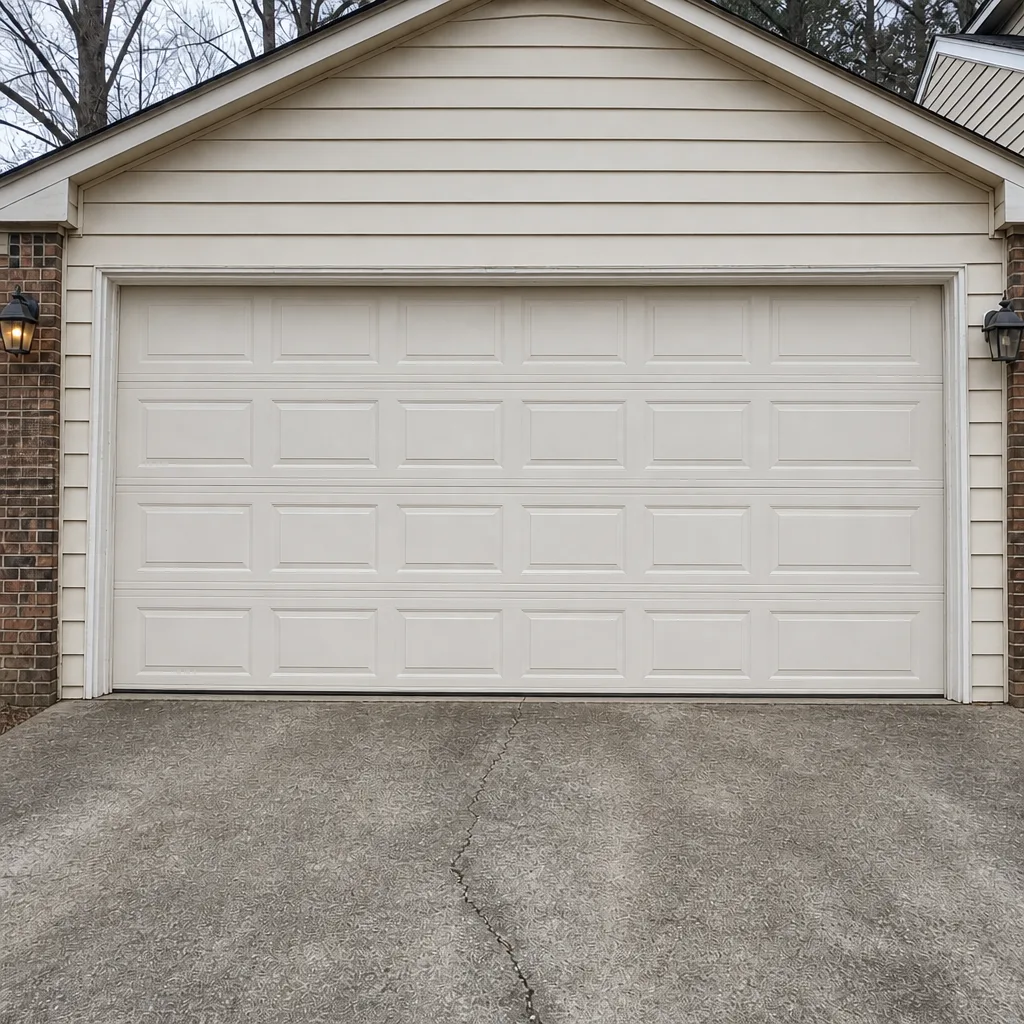
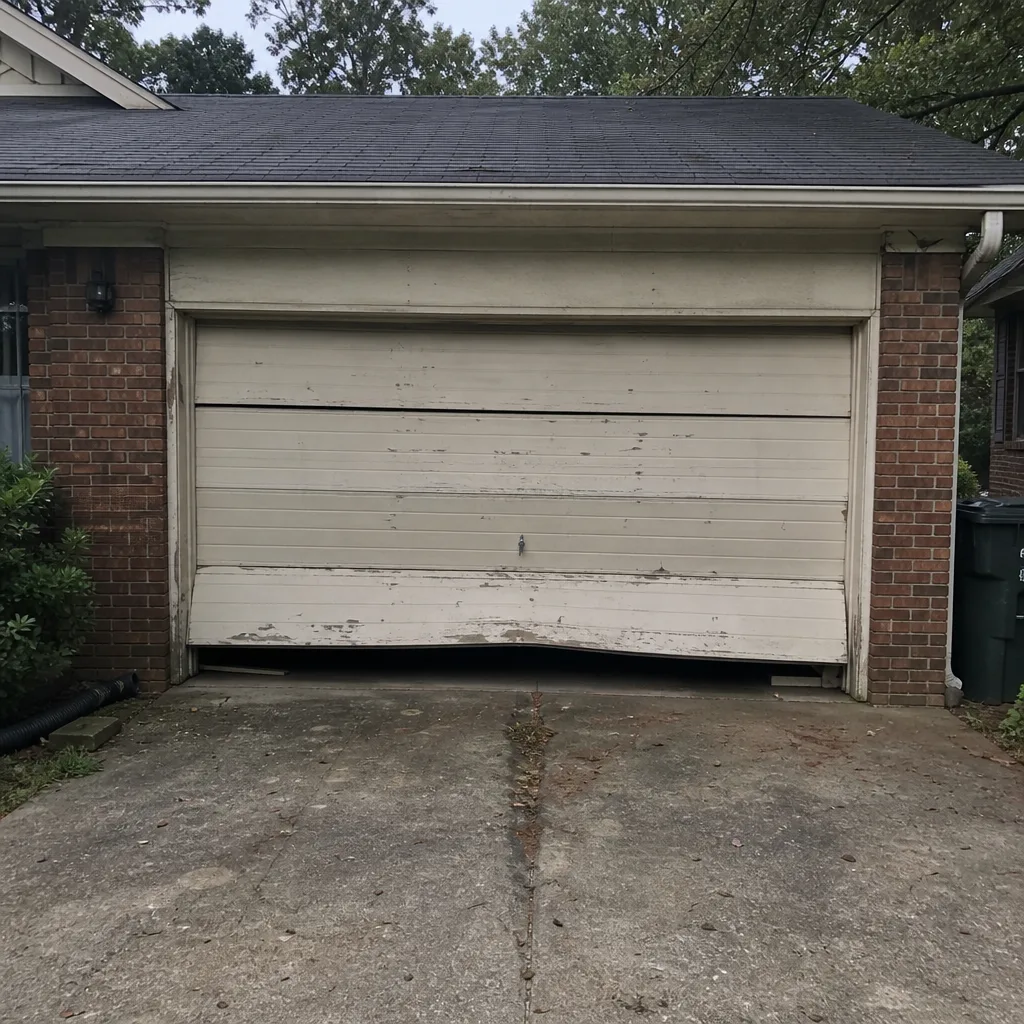
See the difference
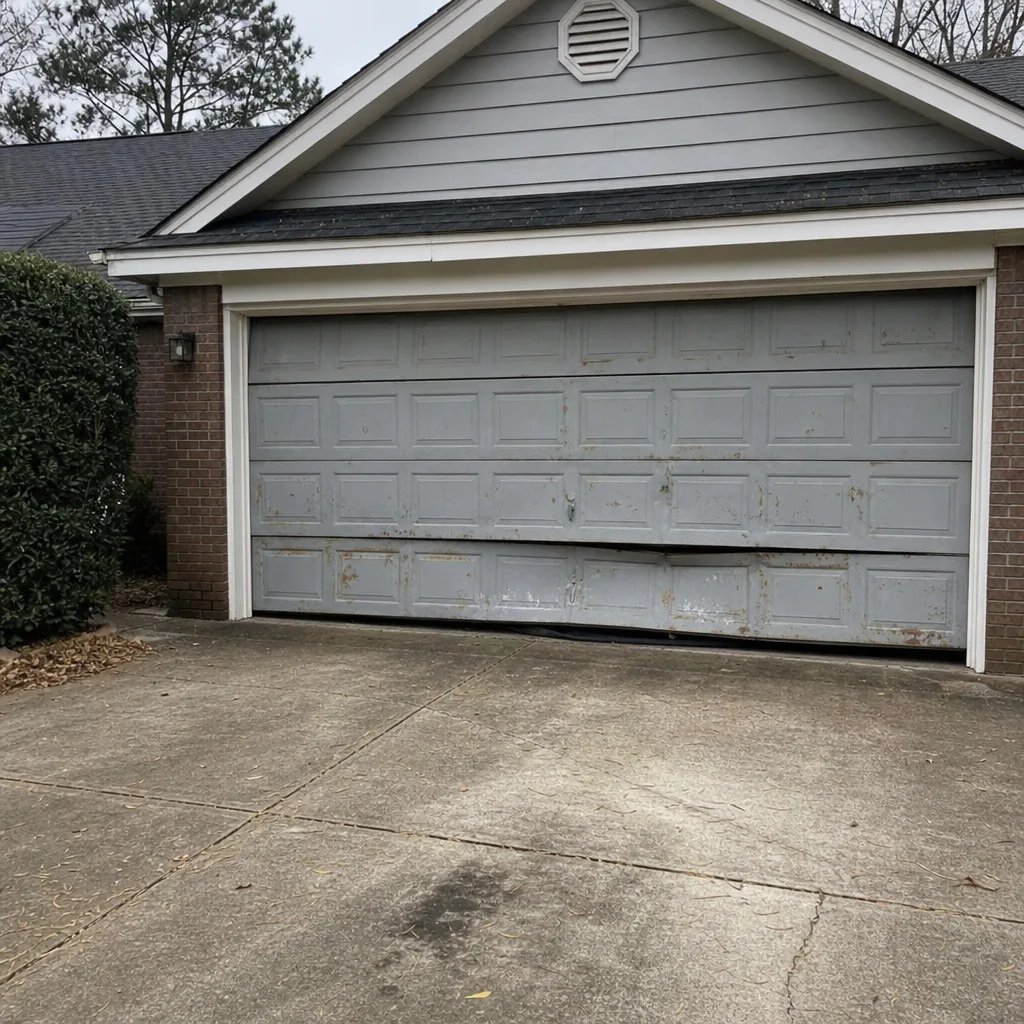 Before
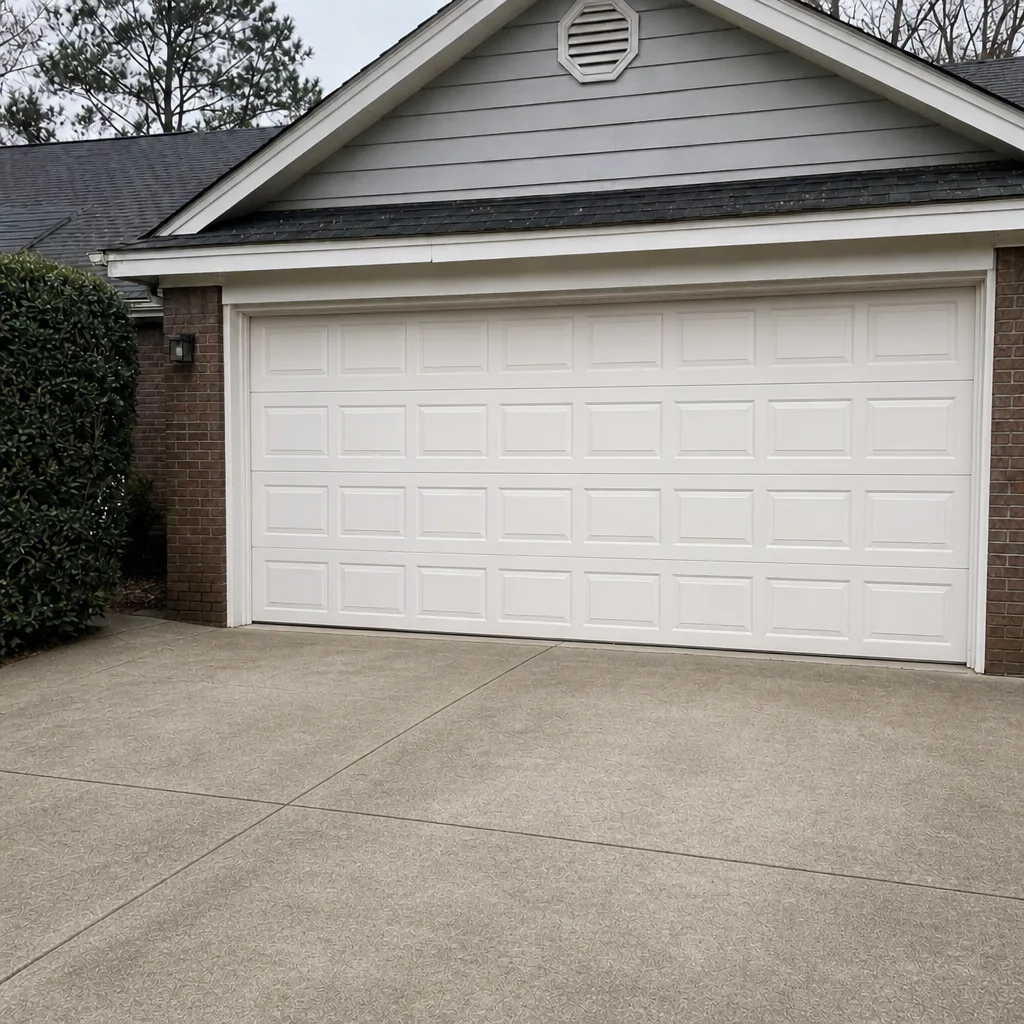 After
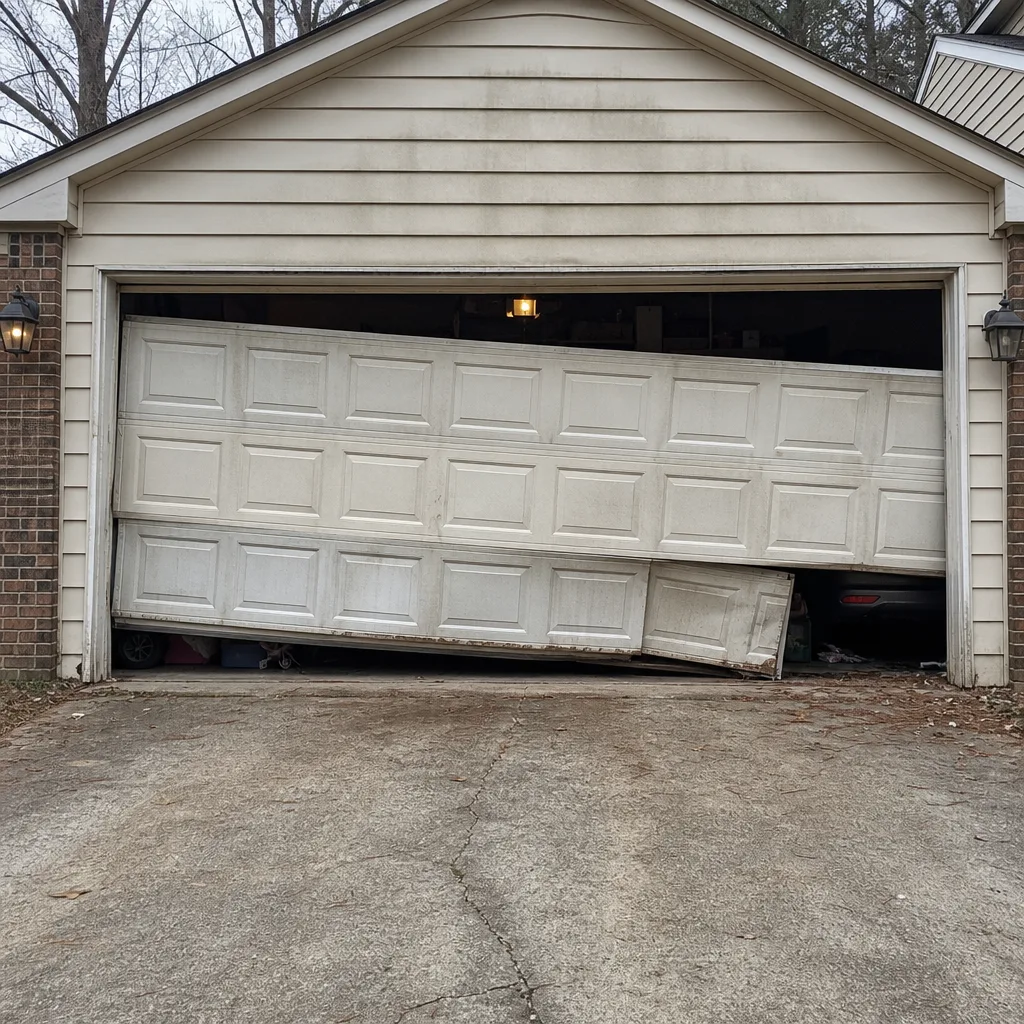 Before
 After
 Before
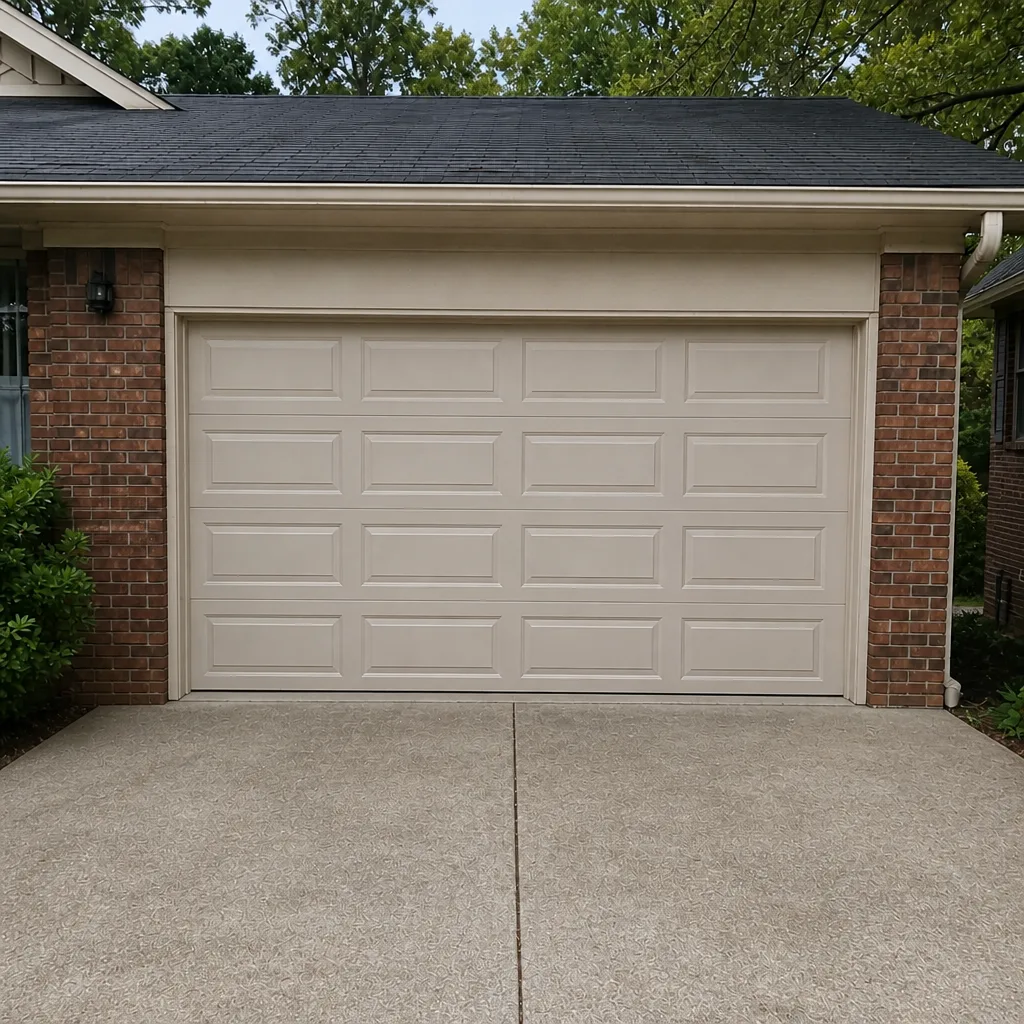 After
When to Call a Professional
Call a professional the moment a job touches the torsion spring, a cable, or the track. Those three components carry the risk that no amount of care eliminates, and they’re where a small mistake becomes an expensive or dangerous one. Call when the door won’t open, when it opens unevenly, when the opener runs but the door stays put, or when you hear a bang from the garage and the door suddenly feels heavy. Call when you see a gap in a spring, a frayed cable, or a bent track, even if the door still works. Call if you started a repair and realized the tension was more than you expected, because stopping is the right move and it’s not too late. Sentry Garage Door Repair offers free estimates in South Fulton. We handle garage door repair for every brand we service, and we diagnose by the actual system rather than guessing. One call covers the door, the opener, and installation, so you never need a second company. Call (833) 612-7942. We answer 24/7, with fast dispatch from 7am to 7pm, Sunday through Friday, and we’re closed on Saturday.
Frequently Asked Questions
No. A torsion spring holds stored energy at full tension, and a winding bar that slips can release it instantly, with no warning. There’s no safe way to learn spring replacement on your own door, regardless of how carefully you follow a video. If a spring is the problem, call a technician. Call (833) 612-7942 for a free estimate.
Lubrication, safety-sensor alignment, remote and keypad programming, battery replacement, and visual inspection are all safe to handle yourself. The line is stored energy: if a job involves the spring, the cables, or the track, it belongs with a technician. If you’re unsure which side of that line your job falls on, a phone call can tell you.
Usually not. Standard Georgia policies exclude faulty workmanship and the damage that follows from it, so self-inflicted damage during a repair is typically not covered. Coverage is more likely for a sudden event you didn’t cause, like a limb or a vehicle hitting the door, but your deductible and specific policy decide that. Read your policy or call your agent before you assume anything. We can work with your insurer if a covered event is part of the picture.
Because the video shows the successful procedure and leaves out the failure mode. A technician in a video has done the job hundreds of times, knows how to feel when a spring is binding, and has the right winding bars. What the video can’t show you is what happens when a bar slips at full tension, because that moment is quick, violent, and not something anyone films. The confidence a video gives you is not the same thing as the skill to handle the failure.
The price is set per job by the written estimate, and the estimate is free. We quote the job before any work starts, so the number you agree to is the number on the invoice. For a specific figure, call (833) 612-7942 and we’ll give you an accurate quote for your door and brand. Estimates are free.
In most cases, yes. Same-day service is available, with fast dispatch from 7am to 7pm, Sunday through Friday, and we’re closed on Saturday. A door that’s stuck open is a security issue, so call and we’ll get you on the schedule quickly. Call (833) 612-7942. Estimates are free.
The Bottom Line
The DIY decision on a garage door isn’t about whether you’re handy. It’s about whether the job has stored energy in it. Lubrication, sensor alignment, remote programming, and a monthly visual inspection are safe, useful, and worth doing yourself, because they extend the door’s life and keep small problems from becoming real repairs. Spring replacement, cable work, and track realignment are not, and no video changes that, because the failure mode is instant and unrecoverable. In South Fulton, humidity and storm seasons add wear to the picture, so maintenance matters more than most homeowners think. Know the line, respect it, and when a job crosses it, call a specialist. Sentry Garage Door Repair covers the door, the opener, and installation under one call. We’re a multi-brand specialist serving South Fulton and the surrounding area, and we treat your garage door as the security perimeter it is. For Sentry Garage Door Repair, the standard is a correct diagnosis the first time. Call (833) 612-7942 for a free estimate.
Written by the team at Sentry Garage Door Repair.