
Last updated November 16, 2026
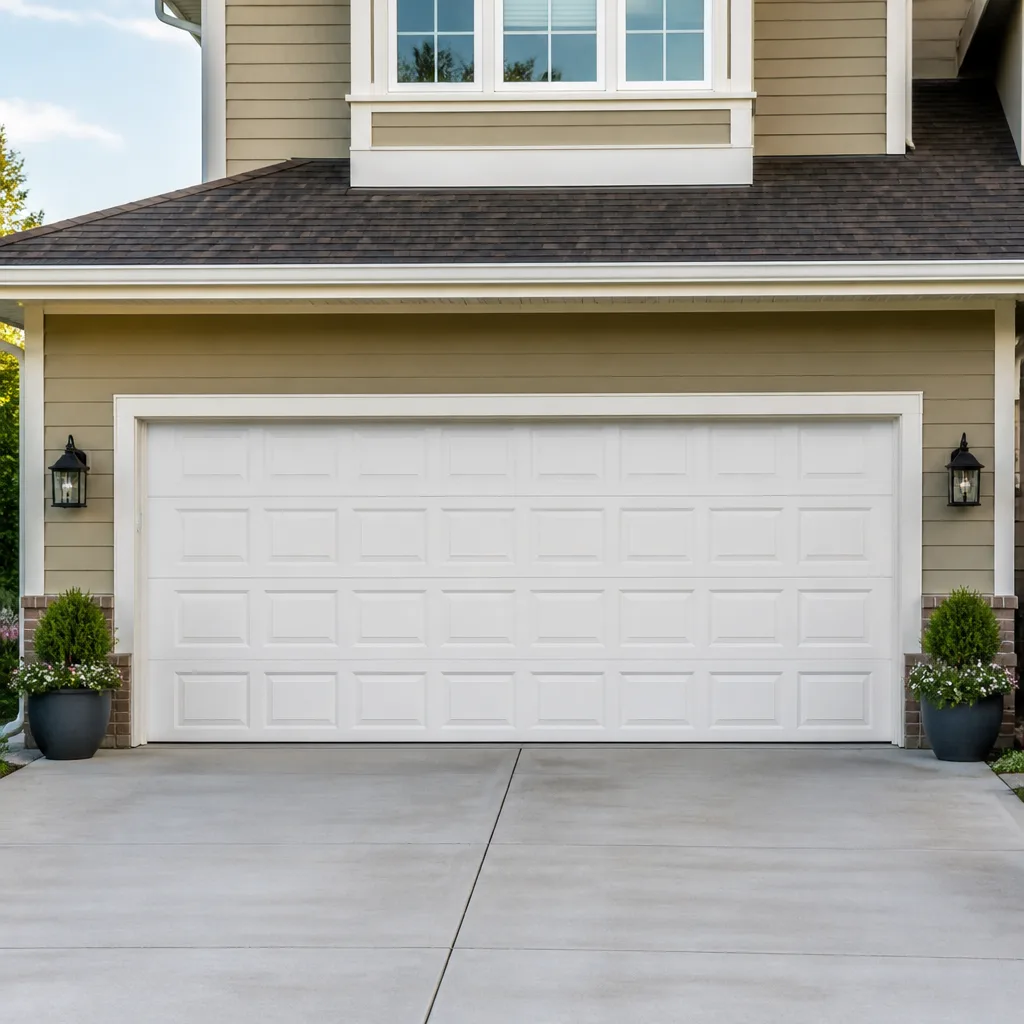 Raised-panel steel
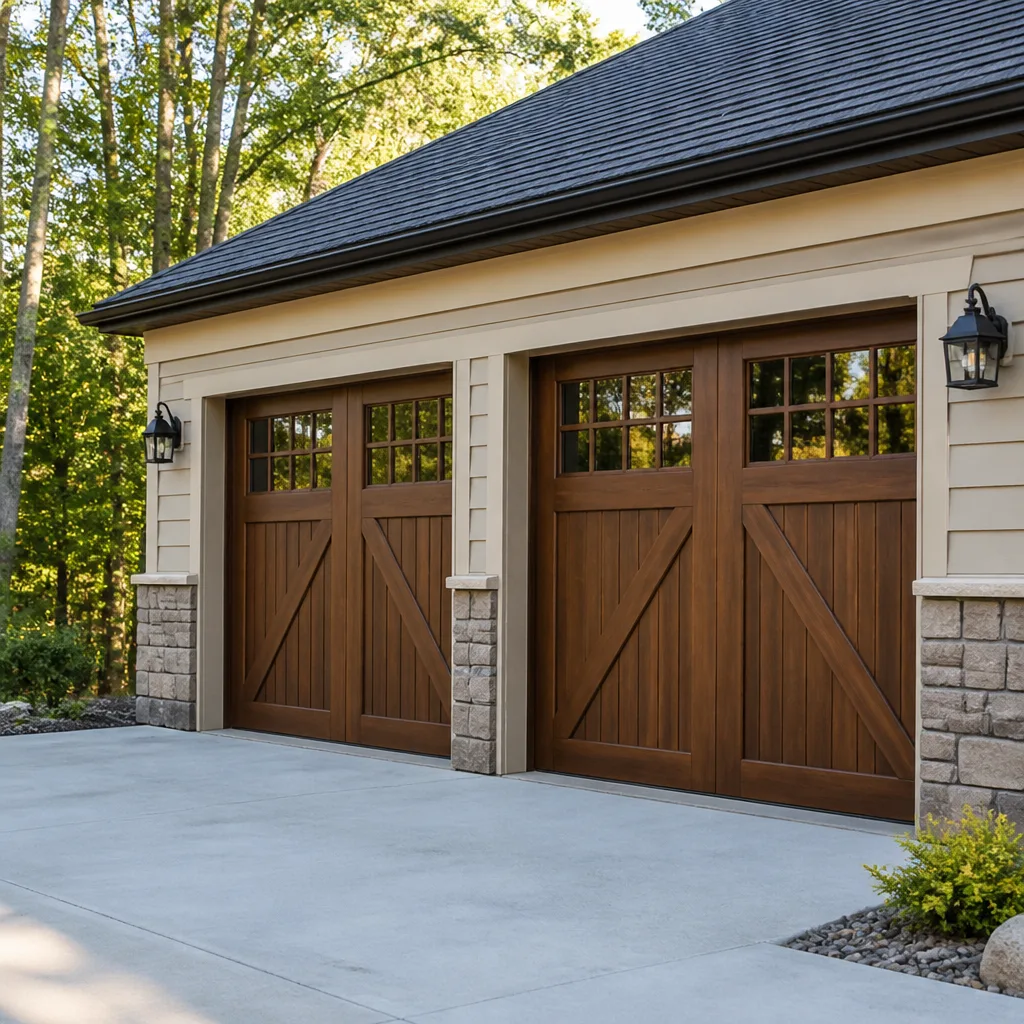 Carriage house
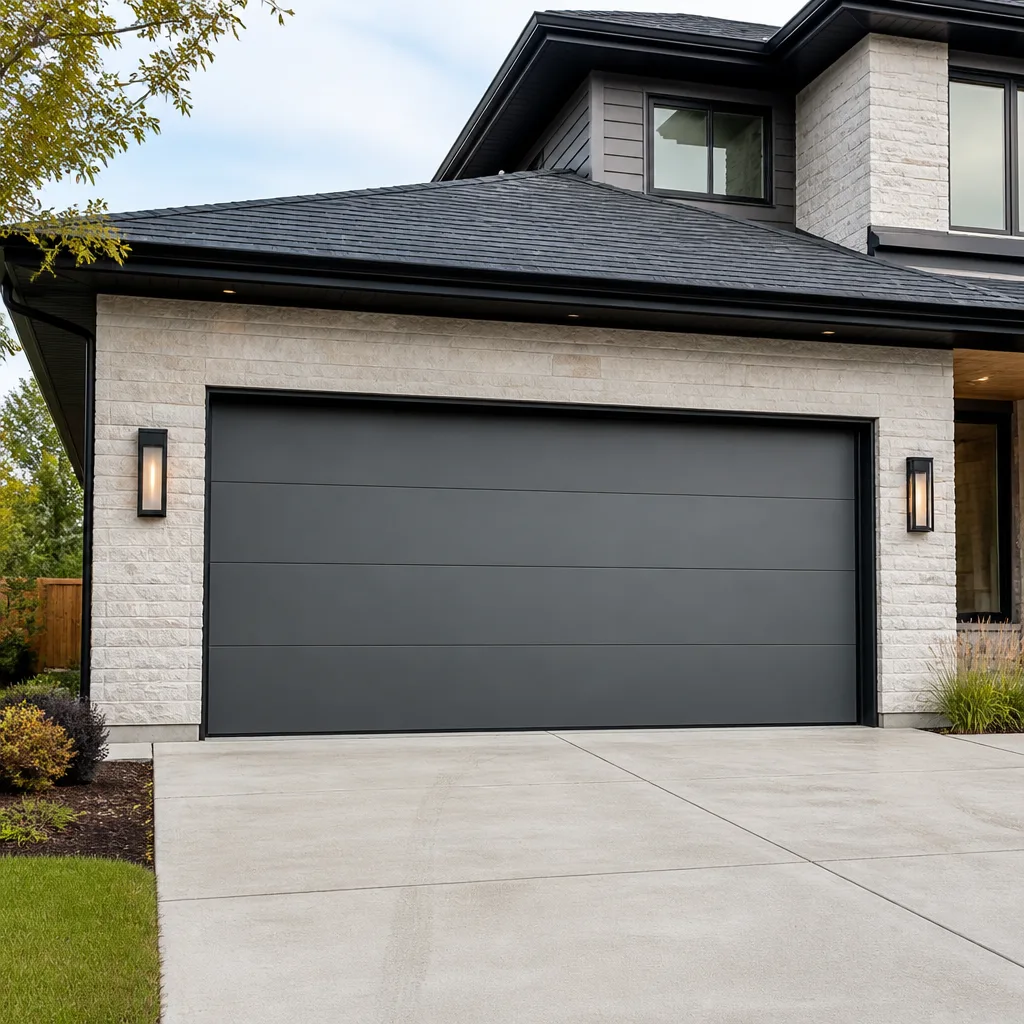 Modern flush
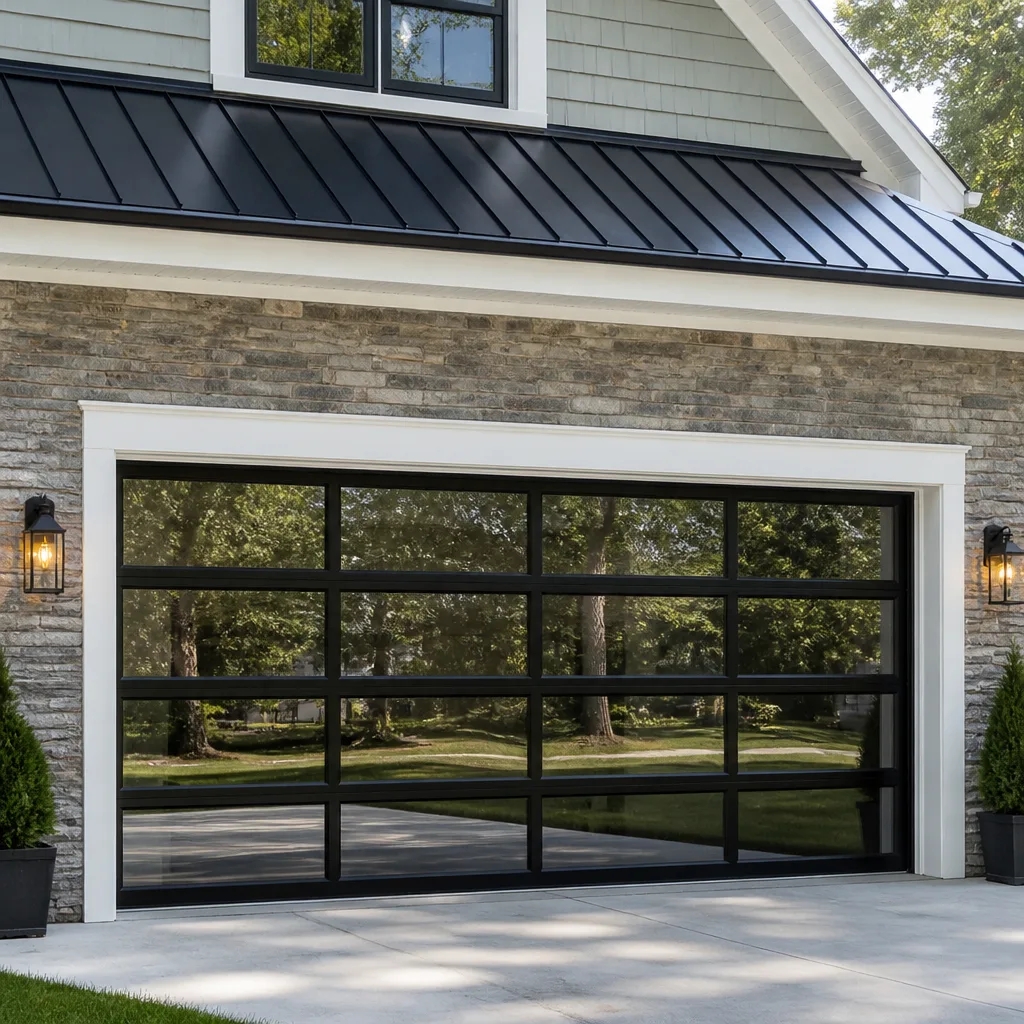 Full-view glass
 LiftMaster openers
 Chamberlain openers
Full 25-point door and opener safety check with every visit - springs, cables, rollers, tracks, and your LiftMaster or Chamberlain opener included
You get a price before we start. It does not change when the pro arrives.
Get your free estimateGarage Door Emergency Preparedness Guide for South Fulton Homes
Most homeowners treat a garage door failure as an inconvenience. That’s the wrong frame. During a power outage, a spring snap, or a storm-driven lockout, a garage door that won’t open becomes an access crisis: the car is trapped, the only route out of the house is a side door, and nobody in the household knows where the emergency release cord is. South Fulton homeowners face this more often than many Atlanta suburbs because portions of the area run on above-ground utility lines, so storm-driven outages are a familiar fact of life here. This guide maps the specific garage door emergencies South Fulton homes run into and gives you a clear protocol for each one, so a bad morning doesn’t turn into a bad week.
Quick Answer
A garage door emergency in South Fulton usually comes down to one of four situations: a power outage with the door down, a broken torsion spring, a storm that locks the door in place, or an opener failure with the car trapped inside. The right response in every case is to stop, identify which scenario you have, and use the manual release only when the spring system is intact. If the door feels impossibly heavy or you hear a loud crack from the springs, call a technician rather than forcing the door. We answer 24/7 at (833) 612-7942, and our technicians have up to 9 years of experience diagnosing exactly this kind of failure.
Styles & brands we work with
- Raised-panel steel
- Carriage house
- Modern flush
- Full-view glass
- LiftMaster openers
- Chamberlain openers
Table of Contents
- What to do during a power outage when the door won’t open
- How to use the manual release safely (and when NOT to pull it)
- What a broken torsion spring emergency actually looks like
- Storm preparedness: locking and securing the door before power is cut
- The emergency contact decision tree: call now versus wait
- Pre-emergency preparation every South Fulton homeowner should do
- Common mistakes to avoid
- Frequently asked questions
What to Do During a Power Outage When the Door Won’t Open
When the power goes out, the garage door defaults to the down position and the opener becomes an inert weight holding it there. That’s the design; the opener isn’t broken, it’s unpowered. The question is whether you know what to do before the moment it happens.
South Fulton’s mix of above-ground and underground utility infrastructure means outage duration varies street to street. Some neighborhoods in the area see the power back within an hour; others wait much longer. Whatever the case, the answer to “how do I get my car out” is the same: the manual release cord lets you disengage the opener so you can lift the door by hand.
Here’s the sequence in order:
- Locate the manual release cord hanging from the opener trolley. It’s usually a red handle with a cord attached; if you haven’t seen it since the installer left, look along the track above where the door meets the opener rail.
- Before you pull it, look at the door. Is the spring system intact? Do the torsion springs above the door look whole, or is any spring visibly broken or sagging? If a spring is broken, stop here and call us – pulling the release with a broken spring is dangerous.
- If the spring looks intact, pull straight down on the cord. You’ll hear the trolley disengage.
- Lift the door slowly by hand. An intact spring system balances most of the door’s weight; if it feels impossibly heavy, stop lifting and don’t force it.
- Once the door is up, prop or secure it before moving the car, then lower it slowly when you’re clear.
When power returns, re-engage the trolley by running the opener once and letting the carriage reconnect. Test the door before you assume it’s working. If anything feels off – grinding, catching, uneven travel – that’s a sign the opener needs a check, and our garage door opener repair team can diagnose it. For more on what’s involved in repair work in general, our page on garage door repair covers the typical scope.
How to Use the Manual Release Safely (and When NOT to Pull It)
The manual release is the single most important piece of safety equipment on your garage door – and the one most homeowners have never tested. It exists so you can disengage an automatic opener and lift the door by hand. It is not a universal escape hatch, and pulling it at the wrong moment can turn a safe situation into a dangerous one.
When it is safe to pull the red cord
The release is safe to use when the spring system is doing its job: the torsion or extension springs are intact, the door moves smoothly by hand, and there’s no visible damage to cables or tracks. In that case, the release is doing exactly what it was designed to do – letting you operate the door without power.
When NOT to pull the red cord
Do not disengage the opener if you suspect a broken spring, a snapped cable, or a door that has come off one of its tracks. A garage door with a failed spring is much heavier than it looks, and forcing it up by hand stresses the cables that hold it in place. In this trade, cable failure is one of the most common secondary failures after a spring snap, and it happens because someone tried to lift the door manually when they shouldn’t have.
If you can’t tell whether the spring is intact from the ground, don’t gamble. Call us. We answer 24/7 at (833) 612-7942. This is exactly the kind of call where a one-minute conversation can prevent a serious injury.
The safety check before any manual operation
- Stand clear of the door path. Never reach under a door that’s partly raised.
- Look at the springs and cables, not just the door panels. Any visible break, sag, or fray means stop.
- Listen for a loud crack or snap – a broken spring almost always makes that sound.
- If the door is heavy at the bottom, that’s a spring problem. Don’t lift it.
- Never leave a door in a half-raised position without someone watching it.
South Fulton homes range from new construction in the area’s newer subdivisions to older stock in established neighborhoods, and some of the older doors use extension springs rather than torsion. The release procedure is the same, but the failure modes are different enough that it’s worth a technician confirming which system your door has before an emergency – our Sentry Garage Door Repair technicians can identify your spring type and talk you through your specific release procedure in a free estimate appointment.
What a Broken Torsion Spring Emergency Actually Looks Like
A broken torsion spring is not a subtle failure. It announces itself. A loud crack or snap – the sound of a tight steel coil giving way – happens right when the door is opening or closing, and then the door stops. Sometimes it stops halfway. Sometimes it doesn’t stop at all because the opener is still pulling while the spring is no longer balancing the weight.
The reason this matters has nothing to do with the door looking broken. It’s that the door becomes catastrophically heavy. A torsion spring exists to counterbalance the door’s weight, so a homeowner lifting an intact-door system is lifting maybe ten or fifteen pounds. A door with a broken spring is lifting the full weight of the panels – hundreds of pounds in a double-door installation. That’s why a door with a broken spring feels impossibly heavy, and why your brain tells you “just push harder.”
What not to do
- Don’t try to force the door up by hand. You can move it an inch and think you’re making progress, but you’re putting the entire load on the cables and the bottom bracket.
- Don’t run the opener again. The opener isn’t meant to lift an unbalanced door, and running it will strain the motor, the gears, or the trolley.
- Don’t try to lift the door with a car jack or a pry bar. This is where cable failures happen, and cables can snap back with enough force to cause real injury.
- Don’t leave the car underneath a partly open door. Close the door fully if you can do so safely, or leave it exactly where it is and stay clear of the path.
We’ve seen what happens when homeowners try to solve a broken-spring situation by force. The spring is the fail-safe; once it’s gone, the rest of the system – the cables, brackets, and torsion tube – is carrying loads it was never meant to carry alone. A technician carries the correct torsion tools, knows how to release the stored tension safely, and can replace the spring the same day in most cases. If you’re in South Fulton and the door cracked once and stopped, call us. We answer 24/7 at (833) 612-7942, and fast dispatch runs from 7am to 7pm Sunday through Friday.
For a closer look at how a full repair is scoped, our page on South Fulton covers the local service picture, and our garage door repair page walks through what’s covered under our diagnostics.
Storm Preparedness: Locking and Securing the Door Before Power Is Cut
Storm season in South Fulton runs through the spring and summer, and a familiar pattern is a storm rolling through, the power going out, and the homeowner suddenly realizing the garage is the biggest opening in the house – and it’s not locked. An automatic opener is a convenience device, not a lock. When the power is out, the opener can’t hold the door closed. The springs are what’s holding it down, and the springs are doing their best with a door that’s designed to open.
If you know a storm is coming and the power might be preemptively cut, this is the prep that actually matters:
- Before the storm, test your manual release – pull it once, feel the door by hand, then re-engage it. This confirms the release works and gives you a mental map of the door’s weight.
- If the power is cut and the door is down, leave it down. Don’t disengage the opener if the car is inside and the door is closed; the door sits in its weatherstripping and the down position is the safest configuration.
- If you need to secure the door against wind, use the manual throw bolt on the track rather than relying on the opener. This is the fail-safe that keeps the door from rolling up if the springs or opener fail during the storm.
- Don’t try to open the door during the storm. Wind and rain plus a moving door is how water gets inside and how a door comes off a track.
Here’s the part most homeowners miss: a disconnected opener leaves the door unsecured. If you pulled the release cord to get the car out, the door is no longer held by the opener – it’s held by whatever the springs and gravity are doing. Without a manual throw bolt engaged, a door in that state can be lifted from the outside by anyone with a coat hanger and a minute of patience. That’s a security problem, not just an inconvenience. The Sentry name is built around treating the garage door as a security perimeter, not just a mechanical convenience, so we say this plainly: any time the opener is disengaged, engage the manual lock.
The Emergency Contact Decision Tree: Call Now Versus Wait
Not every garage door problem is a “call a technician at 6 AM” problem, and not every one is safe to leave until the next business day. Here’s how we walk a homeowner through it on the phone.
Call immediately if any of these are true
- You heard a loud crack from the springs and the door is now stuck halfway or fully down with a car inside.
- The door has come off one of its tracks, is hanging at an angle, or a cable is visibly broken.
- Someone is trapped inside the garage with the door down and the opener is unpowered and the release is broken or inaccessible.
- The door is on a track with a broken spring and someone in the household needs access right now for a medical, safety, or caregiving reason.
- You smell burning, the opener is making a grinding noise with no movement, or the opener trips a breaker when you try to run it.
In any of these cases, call (833) 612-7942. We answer 24/7, and we’ll help you figure out whether to leave the door alone and call a truck now, or whether you’re safe to leave it as-is until we can get to you. Fast dispatch runs 7am to 7pm Sunday through Friday.
Safe to leave in place until the next opening if any of these are true
- The door is fully down, fully closed, and the car is not trapped inside.
- The opener has stopped working but the door is intact and closed, and you don’t need access today.
- The spring is intact, the door operates, but the opener’s remote isn’t responding or the keypad has stopped working.
- The door has a cosmetic issue – a dent, a loose handle, a panel that closes unevenly but still closes.
- You need a new opener installed or the door replaced, and the current door is functioning.
If it’s one of these, call us anyway – a phone diagnosis can save you a service visit or tell you it’s a quick fix. But if you’re on the fence, err toward calling. The cost of a diagnostic call is one thing; the cost of a forgotten broken spring is a much bigger repair.
Pre-Emigration Preparation Every South Fulton Homeowner Should Do
Pre-Emergency Preparation Every South Fulton Homeowner Should Do
The real work in emergency preparedness happens before the emergency. Here’s the list we’d give any homeowner in South Fulton.
Once a year: test the manual release
Pull the red cord, feel the door’s weight by hand, and re-engage the trolley by running the opener. If the door feels heavy, if the release doesn’t disengage the door, or if re-engaging is difficult, that’s a call to us. This is a 5-minute test that prevents the worst version of a bad morning.
Once a year: test the safety reverse
Put a small object – a roll of paper towels, a piece of two-by-four – on the ground under the door and run the door closed. If it doesn’t reverse when it contacts the object, the opener needs adjustment. This is a safety system on your door, and it should be tested the same way you test a smoke detector.
Before storm season: check the door’s balance
Disengage the opener, lift the door to the halfway point, and let go. A balanced door stays roughly where you left it. A door that sinks or rises on its own needs a spring adjustment. This is the single best way to catch a spring on its way out before it snaps.
Store the emergency kit
Every South Fulton household should have these items in the garage, in a spot the whole family knows:
- A flashlight stored near the manual release cord, not somewhere else in the house.
- A printed card with (833) 612-7942 written on it – the phone isn’t reliable in a power outage.
- A manual throw bolt or lock for the door track, so you can secure the door if the opener is disengaged.
- A note explaining how to disengage the opener, in case a guest or a caregiver is the one using the door.
Know your system
If you’ve got a LiftMaster, Chamberlain, Genie, or Craftsman opener, the manual release procedure is more or less the same, but the electronics and the failure points are different. Our technicians have up to 9 years of experience on all four, and we can tell you exactly which system you’re working with. If your door is an Amarr, Wayne Dalton, Craftsman, or Raynor product, the panel and track configuration matters as well – and that’s the kind of detail that should be on paper before a storm hits. Our garage door opener repair team can help you map your system on a routine visit.
See the difference
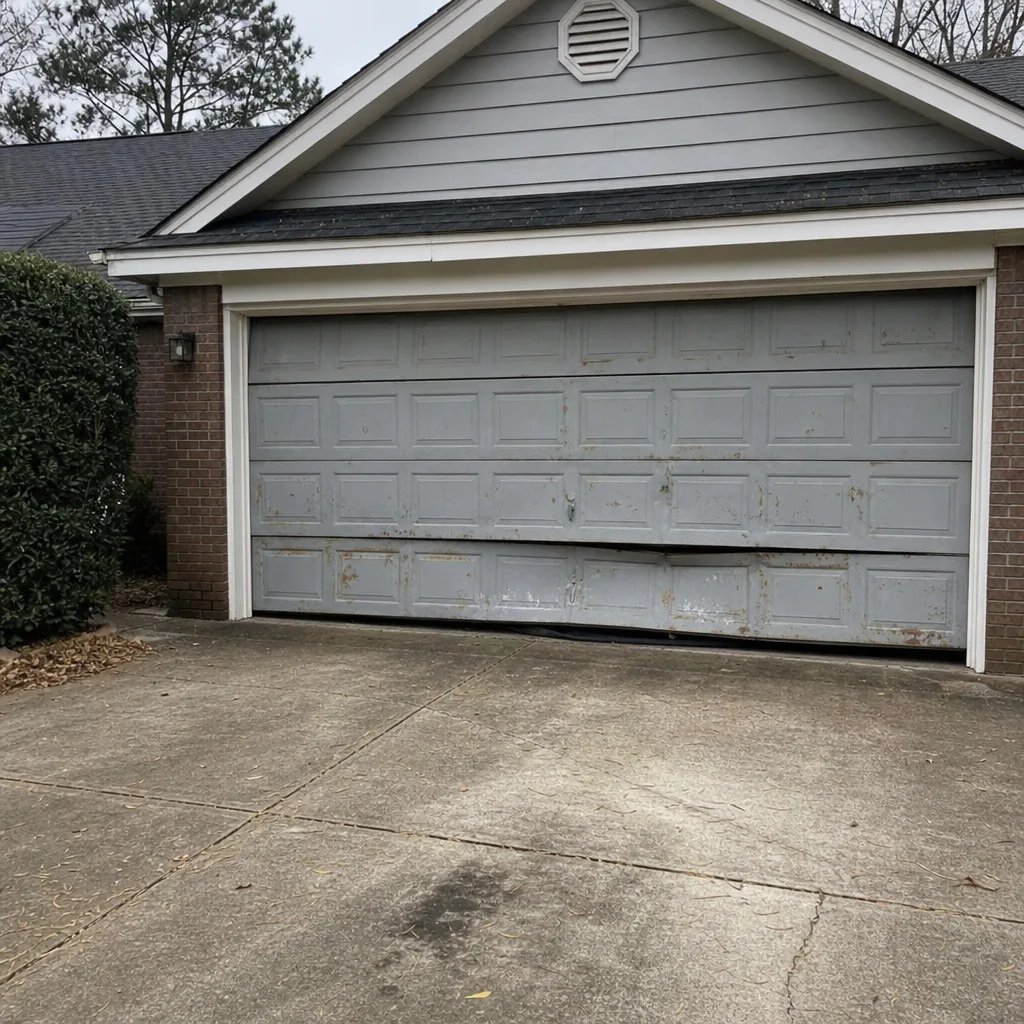 Before
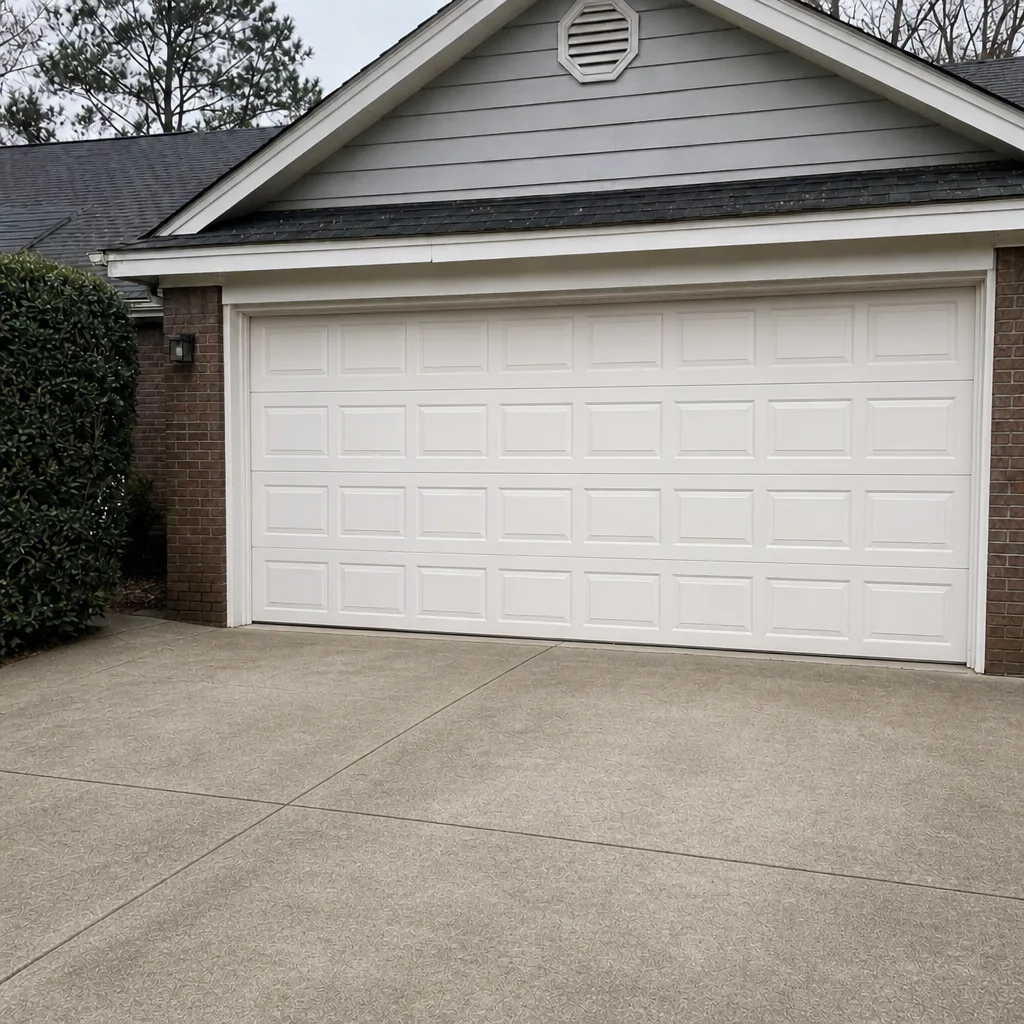 After
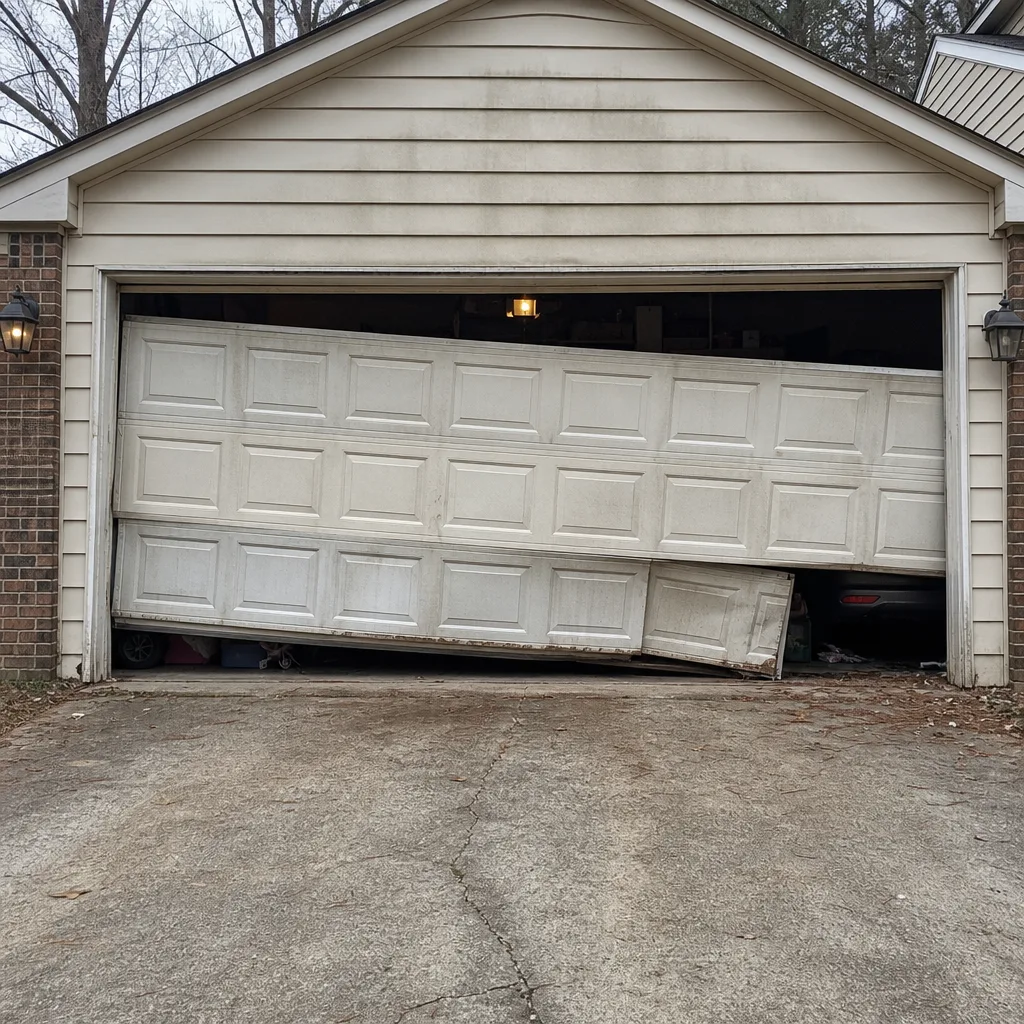 Before
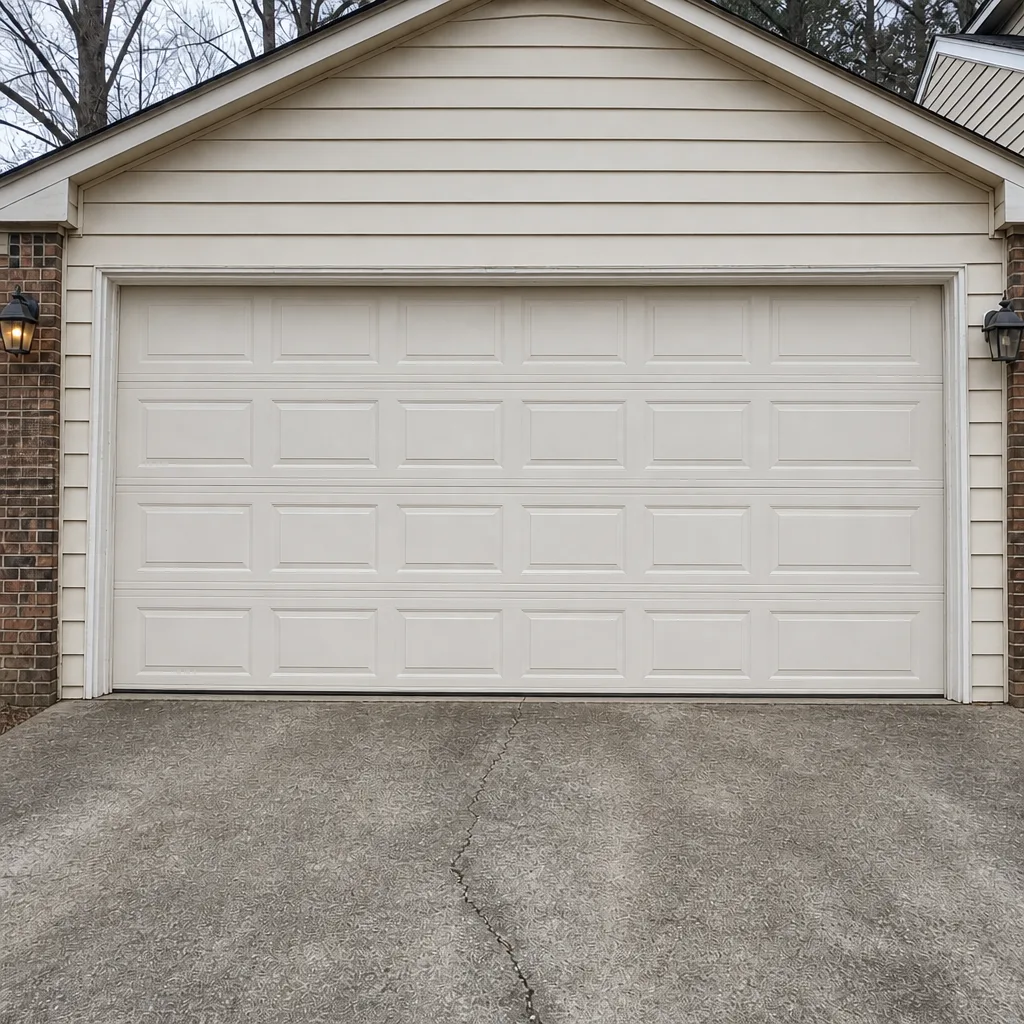 After
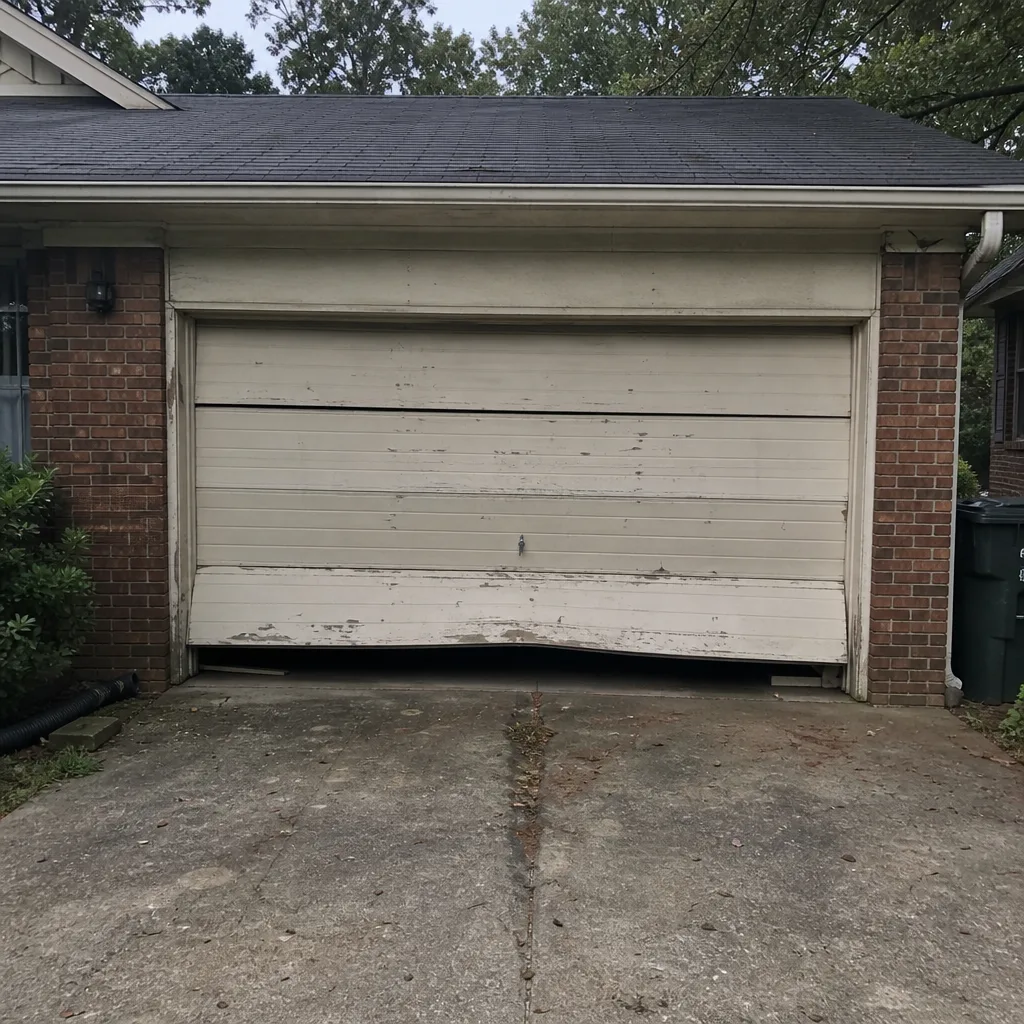 Before
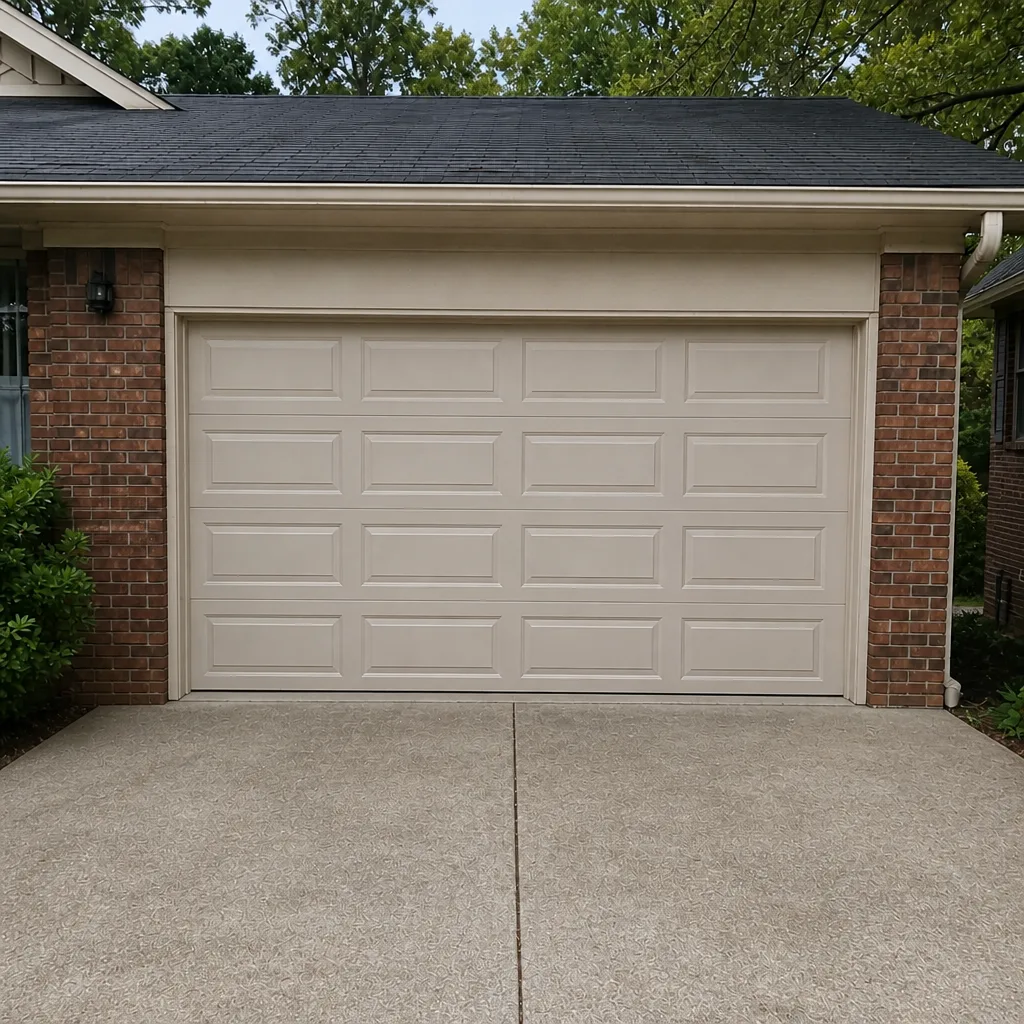 After
Common Mistakes to Avoid
- Trying to lift a broken-door by force. A door with a broken torsion spring isn’t just hard to lift; it’s dangerous. The cables that hold the door are carrying the full weight, and forcing the door is how they snap back. If a door won’t lift easily by hand after you pull the release, stop.
- Not knowing where the manual release is. A power outage is not the moment to be looking for the red cord. Locate it today, and store a flashlight near it. South Fulton outages tend to happen at the least convenient time, which is exactly when you don’t want to be searching.
- Leaving the opener disengaged without a lock. Pulling the release leaves the door unsecured from the outside. If you’ve used the release, put the manual throw bolt in before you walk away. This is a security issue, not a mechanical one.
- Running the opener on a door with a broken spring. The opener will run, the door will rise a few inches, and the motor will strain. Each attempt shortens the life of the opener and could cause a cable failure. Call us instead.
- Ignoring a door that reverses unevenly or hangs a panel lower than the others. Those are early warning signs of a spring, cable, or roller issue. In South Fulton’s storm season, a door that’s already on its way out is the one that fails when the wind picks up.
- Confusing a generalist handyman with a garage door specialist. A handyman may be able to hang a panel, but a torsion spring system requires the right tools and the right training. The spring is under extreme tension; this is not a job for a generalist with a socket set.
- Skipping the annual manual release test. The release is the one emergency system on your door that nobody tests. A release cord that has jammed or rusted in place is the same as not having one – and you’d rather find out on a Saturday afternoon than at 6 AM.
When to Call a Professional
Some garage door problems are safe to leave for a scheduled visit. A broken torsion spring is not one of them. Neither is a door off its track, a visibly snapped cable, a door that has come down hard and won’t lift, or an opener that trips a breaker or smells like hot plastic. A garage door is a spring-loaded system with hundreds of pounds of stored tension; the wrong move at the wrong moment is a real injury risk, not a hypothetical one. In any of those situations, call us rather than improvising. Sentry Garage Door Repair offers free estimates in South Fulton – call (833) 612-7942. We answer 24/7, we can talk you through what’s safe to do before a technician arrives, and fast dispatch runs from 7am to 7pm Sunday through Friday. Same-day service is available for urgent repair calls.
Frequently Asked Questions
Pull the manual release cord hanging from the opener trolley, then lift the door by hand. Before you pull the cord, look at the springs – if any spring is broken or the door feels impossibly heavy, stop and call a technician instead. If the spring is intact, the door should lift easily by hand. Call (833) 612-7942 for a free estimate if anything feels off; we answer 24/7.
You’ll usually hear a loud crack or snap, and the door will stop moving or suddenly become very heavy. From the ground, a broken torsion spring often shows a visible gap in the coil or a spring that’s hanging loose above the door. If you suspect a broken spring, don’t try to force the door up – call us at (833) 612-7942, and we’ll walk you through whether it’s safe to leave as-is until we arrive.
If the power is on and the door is functioning normally, using the opener during a storm is fine. The bigger concern is a door that’s already showing spring or track symptoms – that’s the door that fails when wind and rain hit. Before storm season, test the balance of the door by disengaging the opener and letting it sit at halfway; if it drifts down on its own, schedule a repair call in South Fulton before the next front moves through.
A healthy door should feel light because the springs are doing most of the lifting. If the door feels heavy, the spring system is failing or the opener is still engaged. In either case, don’t force it. A broken spring or a cable failure can cause serious injury when someone tries to lift the door by hand – a trained technician has the correct torsion tools and can diagnose the actual problem. Call (833) 612-7942 for a free estimate.
If the door is down, leave it down – the down position is the safest configuration. If you’ve used the manual release, engage the manual throw bolt on the track so the door can’t be lifted from the outside. Without the bolt, an opener-disengaged door is a security gap. If you’re not sure your door has a manual lock or you need help with a security check, call our team in South Fulton at (833) 612-7942. We answer 24/7, with fast dispatch from 7am to 7pm Sunday through Friday.
No. If your door is intact and the spring system is healthy, the manual release lets you operate the door until the power comes back. Call us if the door won’t lift, a spring has visibly failed, a cable is snapped, the door is off its track, or the opener has been affected by a power surge. For routine questions or a free estimate, call (833) 612-7942 – we’ll tell you honestly whether it’s a call-now situation or a schedule-for-later one.
The Bottom Line
The most useful thing a South Fulton homeowner can do about garage door emergencies is to prepare before one happens. Know where your manual release cord is, test it once a year, learn what a broken spring looks like, and keep a printed copy of our number in the garage. During a power outage, remember that the release is your friend only if the spring system is intact. When a spring has cracked, a cable has snapped, or the door has come off its track, stop and call a professional – the risk of forcing the door is bigger than the inconvenience of waiting. We treat your garage door as the security perimeter it is, and we’re here to help you plan for the next storm, the next outage, and the next morning the door won’t move.
Call (833) 612-7942 for a free estimate. We answer 24/7. Fast dispatch from 7am to 7pm, Sunday through Friday. Same-day service is available for urgent repair calls.
Written by the team at Sentry Garage Door Repair.