
Last updated November 16, 2026
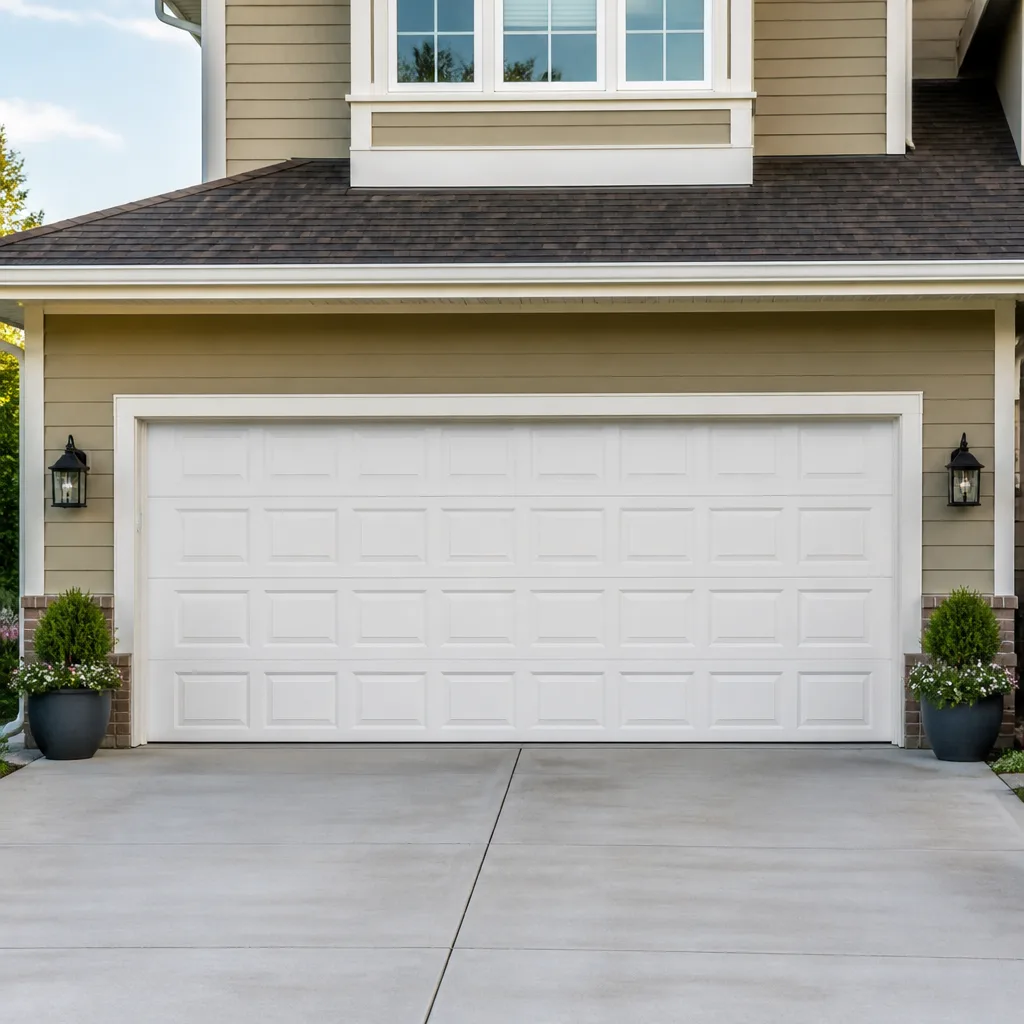 Raised-panel steel
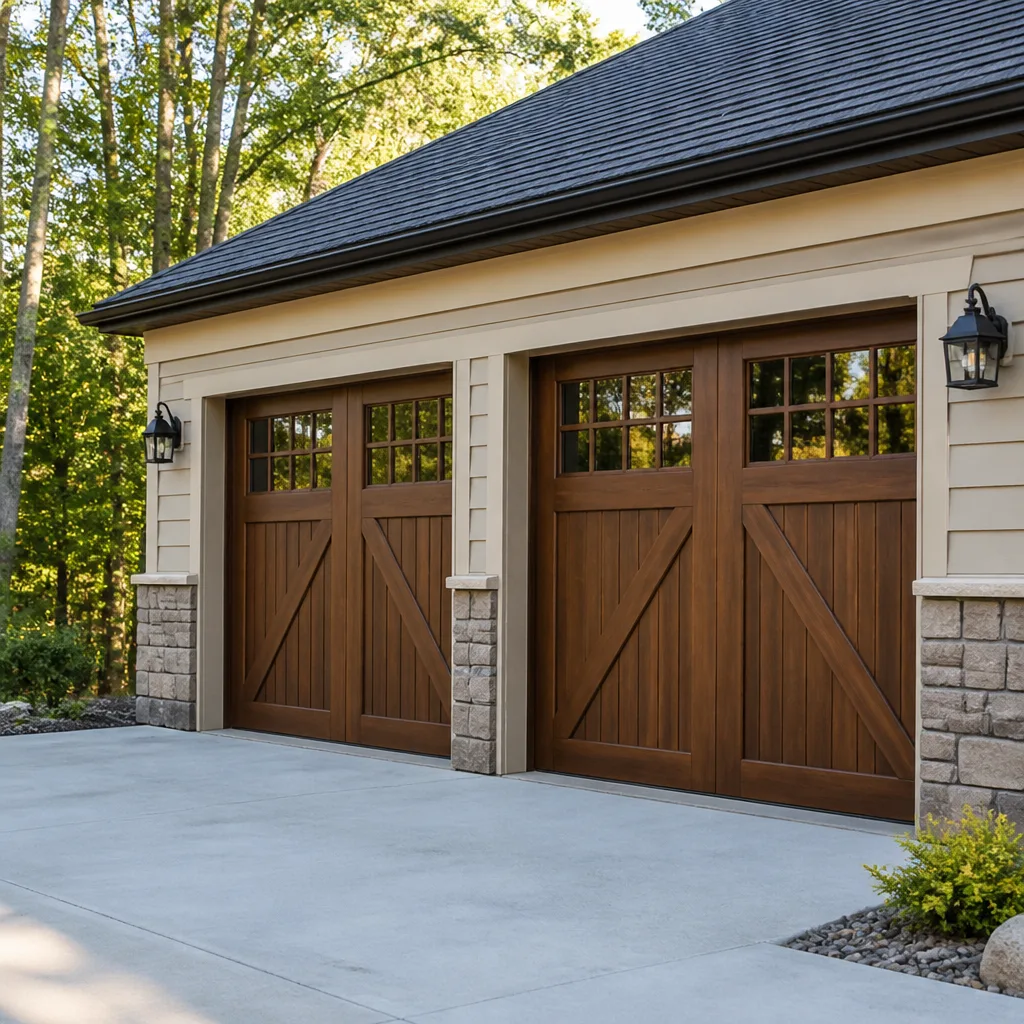 Carriage house
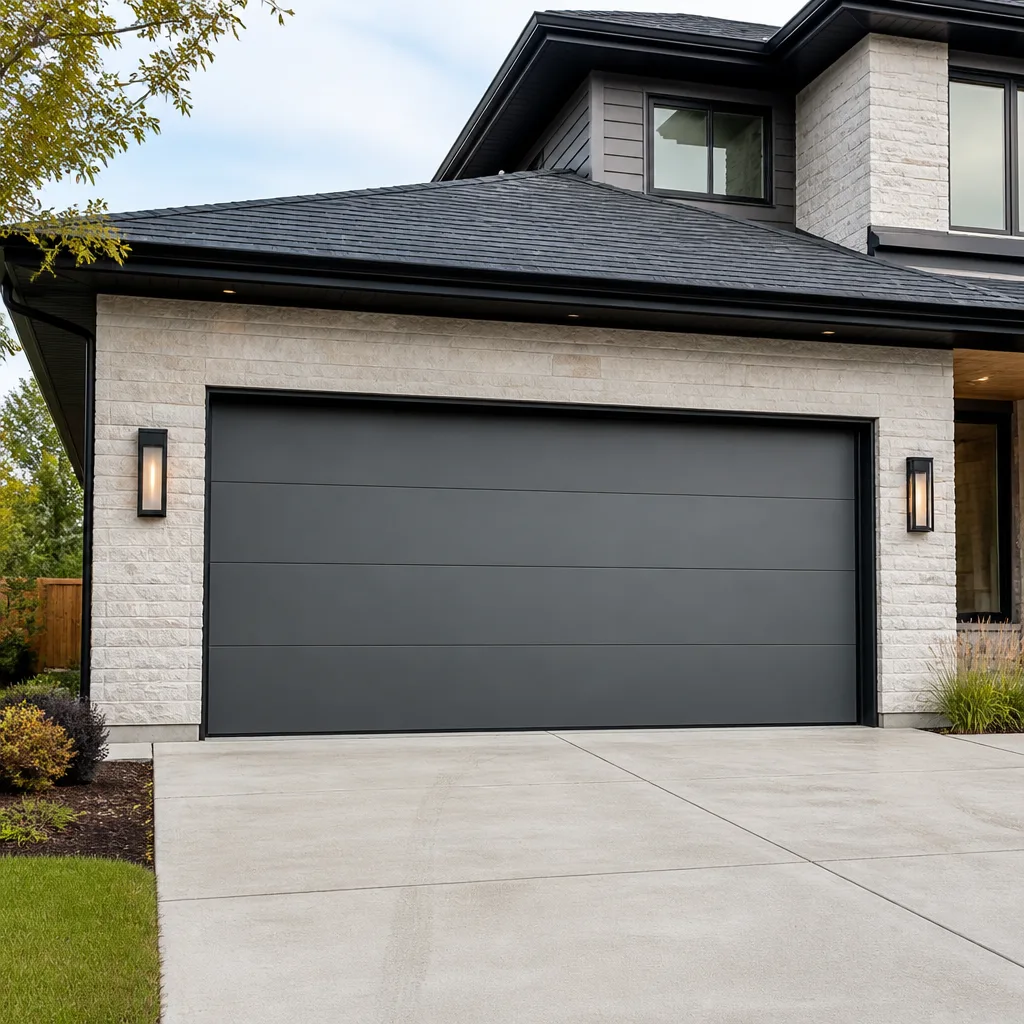 Modern flush
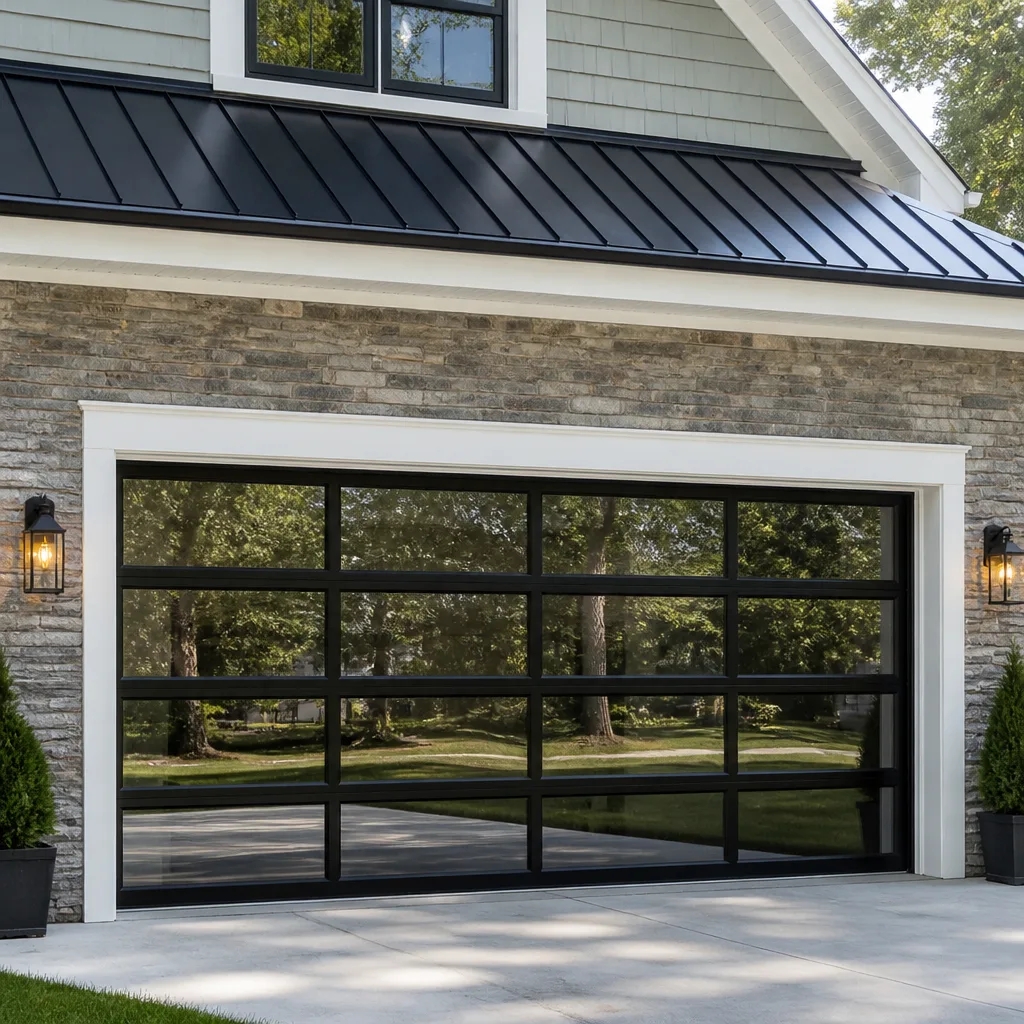 Full-view glass
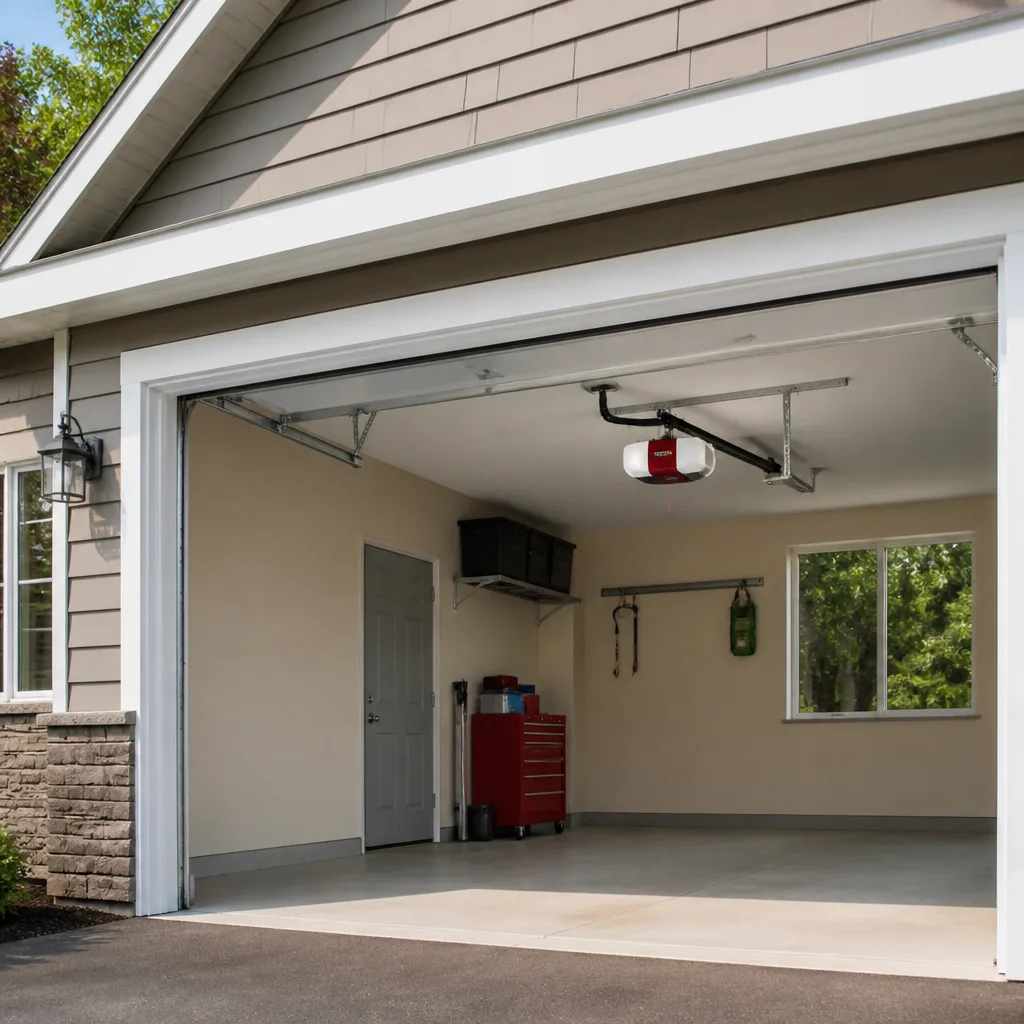 LiftMaster openers
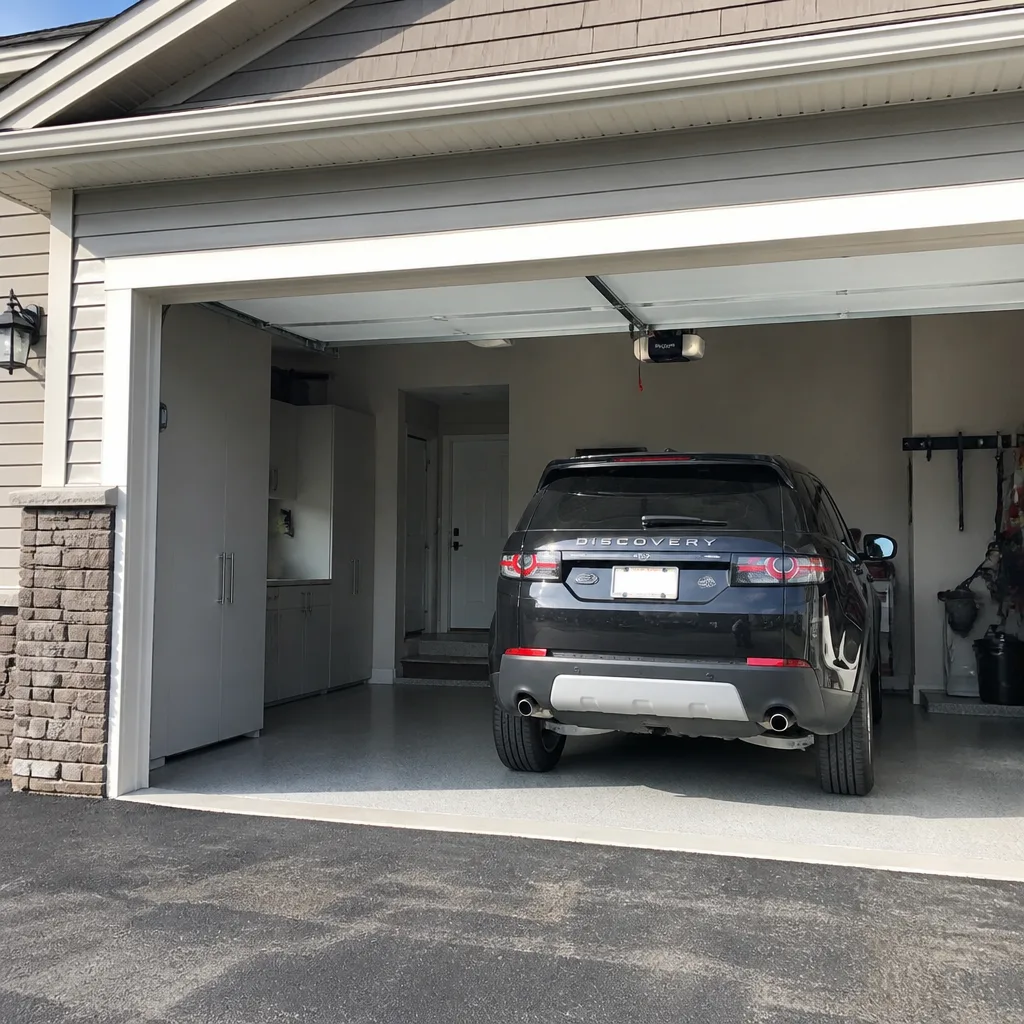 Chamberlain openers
Full 25-point door and opener safety check with every visit - springs, cables, rollers, tracks, and your LiftMaster or Chamberlain opener included
You get a price before we start. It does not change when the pro arrives.
Get your free estimateThe Complete Guide to Garage Doors in South Fulton
Most South Fulton homeowners who replace a garage door price only the panel. That’s the mistake we see repeated most often, and it’s an expensive one. The panel is the visible part, but the door is a system: the springs that carry its weight, the cables that keep it square, the opener that lifts it, and the weatherseal that keeps Georgia’s humidity out of your garage. Change one piece without auditing the rest and you shorten the life of the whole assembly. South Fulton makes this harder than most places, because the city’s newer master-planned subdivisions and older unincorporated parcels sit under different rules, different HOAs, and different installation realities. This guide walks through all of it, from incorporation boundary to final adjustment.
Quick Answer
A garage door in South Fulton is a complete system made of four parts – the door panel, the torsion or extension springs and cables, the opener, and the weatherseal – and each part has to be sized and matched to the others for the door to last. Replacing a panel without checking spring capacity, track alignment, and opener compatibility is the most common cause of premature failure in this market. In South Fulton, which rules apply to your door depends on whether your address sits inside the 2017 city limits or in an unincorporated Fulton County parcel, and your HOA may add its own material and color requirements on top.
Styles & brands we work with
- Raised-panel steel
- Carriage house
- Modern flush
- Full-view glass
- LiftMaster openers
- Chamberlain openers
Table of Contents
- Why a Garage Door Is a System, Not a Panel
- How South Fulton’s 2017 Incorporation Affects Your Door
- HOA Rules in Cascades, Cambridge Estates, and Other Communities
- Steel vs. Composite vs. Wood in Georgia’s Humid Clay Climate
- Opener Compatibility: The Step Most Homeowners Skip
- A Realistic Timeline from First Call to Working Door
- What Routine Maintenance Actually Prevents
- How to Choose a Garage Door Company in South Fulton
Why a Garage Door Is a System, Not a Panel
A sectional garage door looks simple from the driveway. In reality it’s a balanced mechanical assembly, and every part is sized for the load the others carry. Springs are rated by cycle life and by the weight of the specific door they lift. Cables are matched to the drum. The opener is matched to the door’s weight and balance. Tracks are set to a specific plumb and pitch. When one component changes without the others being checked, the whole assembly runs out of balance, and the weakest part fails first.
This is why a door that gets a new panel and nothing else often starts squealing, drifting, or reversing within a year. The new panel is usually a different weight than the old one, and the existing springs were tensioned for the original door. In our experience, the most reliable installs are the ones where the technician treats the door as a single unit and audits every component before quoting.
Here’s what a proper system audit covers:
- Door weight and balance – the door should hold at roughly waist height when lifted by hand and released. If it drops or rises on its own, the springs are out of spec.
- Spring cycle rating – standard springs are rated for a set number of cycles; high-cycle springs are available and worth asking about if your door runs multiple times a day.
- Cables and drums – fraying, kinks, or slack on either side of the door mean the assembly is no longer lifting evenly.
- Track alignment – vertical track should be plumb; horizontal track should have a slight back-pitch so the door closes under its own weight.
- Hinge and roller wear – nylon rollers last longer and run quieter than steel in a humid climate.
- Bottom weatherseal and perimeter seal – the barrier between a conditioned garage and Georgia’s outdoor humidity.
- Opener compatibility – travel limits, force settings, and rail length all have to match the new door.
If you’re already dealing with a door that’s out of balance or won’t stay closed, that’s a garage door repair conversation, not a replacement one. The two are not the same job, and a specialist should tell you which you actually need.
How South Fulton’s 2017 Incorporation Affects Your Door
South Fulton became a city in 2017, and that single fact still trips up homeowners and contractors alike. A large share of what people call “South Fulton” is inside the city limits; some of it is still unincorporated Fulton County. The two jurisdictions don’t always apply the same permitting process, inspection requirements, or code interpretations to a given address. That means two neighbors on what looks like the same street can have different rules for the same job.
What this means in practice:
- Confirm which jurisdiction your address falls under. The city of South Fulton and unincorporated Fulton County are the two possibilities; a quick lookup through the city or county website will confirm.
- Ask the building department whether your specific job needs a permit. A like-for-like door swap is often permit-exempt; structural changes to the opening, track relocation, or header work usually are not. Rules vary, so ask about your address specifically.
- Get the permit requirement in writing before work starts. If a permit is required, the written estimate should separate permit cost from labor and material.
- Ask who pulls the permit. On permitted jobs, the licensed contractor should be the one pulling it – that’s part of what you’re paying for.
- Schedule the inspection window into your timeline. Inspection availability is a real variable; build in days, not hours.
We don’t guess at permit rules. We ask the building department for the address in question, because the answer depends on jurisdiction and on the scope of the work. If you’re not sure which side of the line you’re on, mention it when you call and we’ll walk through it with you.
HOA Rules in Cascades, Cambridge Estates, and Other Communities
South Fulton’s master-planned communities – Cascades and Cambridge Estates among them – were built around a consistent visual character, and their HOAs enforce that character through architectural review. Door style, panel configuration, window placement, and color are commonly specified in the HOA covenants. In many of these subdivisions, the HOA restriction is stricter than the city code, and it’s the HOA that will send a letter if the installation doesn’t match.
The most common HOA conflicts we see aren’t about whether the door is nice – they’re about whether it matches:
- Panel style – raised-panel vs. carriage-house vs. flush can all be spelled out in the covenants.
- Window inserts – some communities require them; some prohibit them.
- Color – often a specific manufacturer color code, not just “white” or “tan.”
- Material appearance – some HOAs require a wood-look finish even when the actual material is steel.
Before you order a door in South Fulton, pull your HOA’s architectural guidelines and, if the rules are ambiguous, get written approval from the architectural review committee. Ordering first and asking second is how homeowners end up paying twice. When we quote a replacement in a master-planned community, we ask for the HOA specs up front so the door on the truck is the door the committee approved. Brand-agnostic service helps here: because we aren’t tied to a single manufacturer, we can match the model that fits the HOA spec rather than pushing the one brand we happen to sell.
Steel vs. Composite vs. Wood in Georgia’s Humid Clay Climate
South Fulton’s climate is hard on garage doors in a specific way. Long, humid summers and clay-heavy soil that swells and shrinks with the seasons put different stresses on the door than the dry heat of the Southwest or the freeze-thaw of the Northeast. Steel is the workhorse material in this market. Wood has real aesthetic appeal but needs more attention here. Composite and wood-look steel have grown popular because they pair the look with lower maintenance in a humid climate.
Here’s how the three main materials hold up:
- Steel – most common in South Fulton, and the most forgiving of humidity when the finish is intact. Insulated steel is the standard choice for attached garages because it manages heat and sound. The main failure mode is rust at the bottom edge, where road splash and standing water collect. A painted or powder-coated steel door with intact seals will last well in this climate.
- Composite and wood-look steel – a good middle path. You get the carriage-house or wood-plank appearance many HOAs require, without the seasonal movement and repainting that real wood demands in Georgia humidity.
- Wood – beautiful, but it needs a fresh finish on a regular schedule in this climate and is more sensitive to moisture at the bottom rail. If you go wood, budget for refinishing time, not just the install.
Clopay and Amarr both make steel and composite lines that fit this climate well, and Wayne Dalton’s steel construction is common in the area’s subdivisions. The right answer depends less on brand than on whether the door is insulated, how the bottom seal is protected, and how the door is sized for the opening. On the clay-soil side, one thing worth checking on any install: the garage slab and the header should be plumb and level. In older South Fulton parcels, settling is common, and a door that fits perfectly on a level opening will bind on one that isn’t. A technician should verify the opening before ordering, not after.
Opener Compatibility: The Step Most Homeowners Skip
A new door puts new demands on the opener. Spring tension, door weight, and balance all change when the panel changes, and an opener that was sized for the old door may not lift the new one reliably. This is why we audit the opener before quoting any replacement, and why we treat garage door opener repair as its own discipline rather than a side job to the door work.
Opener systems split into two worlds, and both need to be handled correctly:
- Legacy radio-frequency openers – LiftMaster, Chamberlain, Genie, and Craftsman units built before smart-home connectivity. These are reliable and serviceable, but they’re increasingly on older frequencies and sometimes need receiver or remote replacement rather than repair.
- Smart and Wi-Fi-connected openers – the same major brands now ship connected units with app control and integration to home automation. These need a technician who understands both the mechanical travel limits and the network side; a door that opens but doesn’t report to the app is a different problem from a door that won’t open at all.
What an opener audit actually checks: travel limits and force settings, rail length and alignment to the door, safety-reverse sensors, wall control wiring, and the drive system (belt, chain, or screw). If your door uses an older Craftsman or Genie opener with a new heavier panel, the opener may simply need to be replaced alongside the door – and you should know that before the panel arrives, not after.
If your opener is the part that failed, that’s a separate call. We handle opener repair as its own service because the diagnostic path is different from a door repair, and combining the two on the same visit is often the most efficient way to handle a failure.
A Realistic Timeline from First Call to Working Door
Replacement timelines in South Fulton depend on four things: whether the job needs a permit, whether it’s in an HOA community, whether the door is a stock size or a custom order, and whether the opener needs to be replaced alongside it. A typical timeline looks like this:
- Day 1: Free estimate and measurement. The technician measures the opening, checks the header and slab, audits the existing springs, cables, and opener, and takes photos for the HOA file if needed.
- Day 1-3: HOA and permit confirmation. If your community has architectural review, the written approval comes before anything is ordered. If a permit applies, it’s filed with the correct jurisdiction (South Fulton city or Fulton County).
- Day 3-10: Door order. Stock sizes move faster. Custom sizes, specific colors, and HOA-mandated panel styles take longer. This is the longest variable in the whole project.
- Day of install: Removal and installation. Old door comes down, new tracks, springs, and panel go up, opener is recalibrated or replaced, weatherseal is set. Most standard installs finish in a day; larger or more complex jobs may run into a second.
- Same day: Balance and safety test. The door is cycled, the safety-reverse is tested with a physical obstruction, and the opener is set to the correct force and travel.
- Inspection (if required): The building department inspects on its own schedule. Build in days, not hours.
The single most common reason a South Fulton replacement runs long is HOA approval happening after the order. Get the HOA letter first. The second most common is a permit requirement discovered after the job is quoted. Confirm jurisdiction and permit status before the deposit.
What Routine Maintenance Actually Prevents
Most garage door failures aren’t sudden. They’re the end of a slow drift that nobody noticed: a cable that started to fray, a hinge that loosened, a bottom seal that cracked and let humidity in, a spring that lost tension over months. A short annual check catches these early, and it’s the single cheapest step a South Fulton homeowner can take.
What a routine check should cover:
- Lubricate hinges, rollers, and springs – a proper garage door lubricant on metal-on-metal contact points.
- Inspect cables for fraying – any visible strand separation means the cable needs replacing, not adjusting.
- Test the balance – lift the door by hand to waist height and release; it should stay put.
- Check the weatherseal – the bottom seal and perimeter seal are what keep Georgia humidity out of the garage. A cracked seal is a small repair now and a bigger one later.
- Test the safety reverse – place a physical obstruction under the door and confirm it reverses.
- Check the photo-eye sensors – both should be aligned and unobstructed.
What maintenance prevents in a humid climate specifically: rust at the bottom rail, weatherseal rot that lets moisture into the garage, and hinge binding caused by debris settling in the tracks. None of these are expensive to fix if they’re caught early, and all of them get expensive if they aren’t.
How to Choose a Garage Door Company in South Fulton
The garage door industry has a wide range of service levels, and the difference matters most on the first visit. A company that shows up and asks “what color do you want?” is quoting a panel. A company that shows up and asks about spring cycle life, opener compatibility, HOA approval, and jurisdiction is quoting a system. Look for the second kind.
What to check before you book:
- Licensed and insured – ask for the license and insurance, and confirm the company doing the work is the one that’s licensed.
- Multi-brand capability – a company that services LiftMaster, Chamberlain, Genie, Craftsman, Clopay, Amarr, Wayne Dalton, and Raynor can diagnose your actual system instead of steering you toward what it sells.
- Full-system scope – door, hardware, and opener under one call. A shop that only does doors will hand off the opener to someone else, and you’ll be coordinating two companies.
- Upfront written pricing – the price is quoted and agreed before any work starts. If a company won’t put it in writing, that’s a signal.
- Free estimates – on a system this expensive to replace, the estimate should be free and unhurried.
- HOA awareness – in Cascades, Cambridge Estates, and similar communities, the company should be ready to work from your HOA specs, not guess.
We’re a specialist team – repair, opener repair, and installation under one call – and we recommend what fits your door and your home, not what a dealer agreement says we have to sell. That’s what we mean by Sentry-standard service. You can read more about the full range of work on the Sentry Garage Door Repair page or on our South Fulton service page.
Common Mistakes to Avoid
- Pricing the panel only. A panel quote excludes springs, cables, track alignment, opener recalibration, and weatherseal. Add those in mentally before you compare bids, or you’ll be surprised at invoice time.
- Ordering before HOA approval. In South Fulton’s master-planned communities, the HOA can require a specific panel style and color. Ordering first and getting approval after is how homeowners end up paying for a second door.
- Skipping the opener audit. A heavier new panel can overwhelm an older Craftsman or Genie opener. The time to learn that is before the panel arrives, not after.
- Assuming “South Fulton” means one jurisdiction. City limits and unincorporated Fulton County parcels don’t always follow the same permitting process. Confirm your address before you assume.
- Choosing a door without checking insulation. If your garage is attached to the conditioned space, an uninsulated door turns the garage into a heat load in a Georgia summer. Insulated steel is the practical default.
- Ignoring the bottom seal. The bottom weatherseal is the smallest line item on the quote and the one that keeps humidity out of the garage. Skip it and you’ll be back for a repair.
- Treating the door as a commodity purchase. Your garage door is your home’s largest entry point. There’s a meaningful difference between a company that treats it as a security perimeter and one that treats it as a box to install.
See the difference
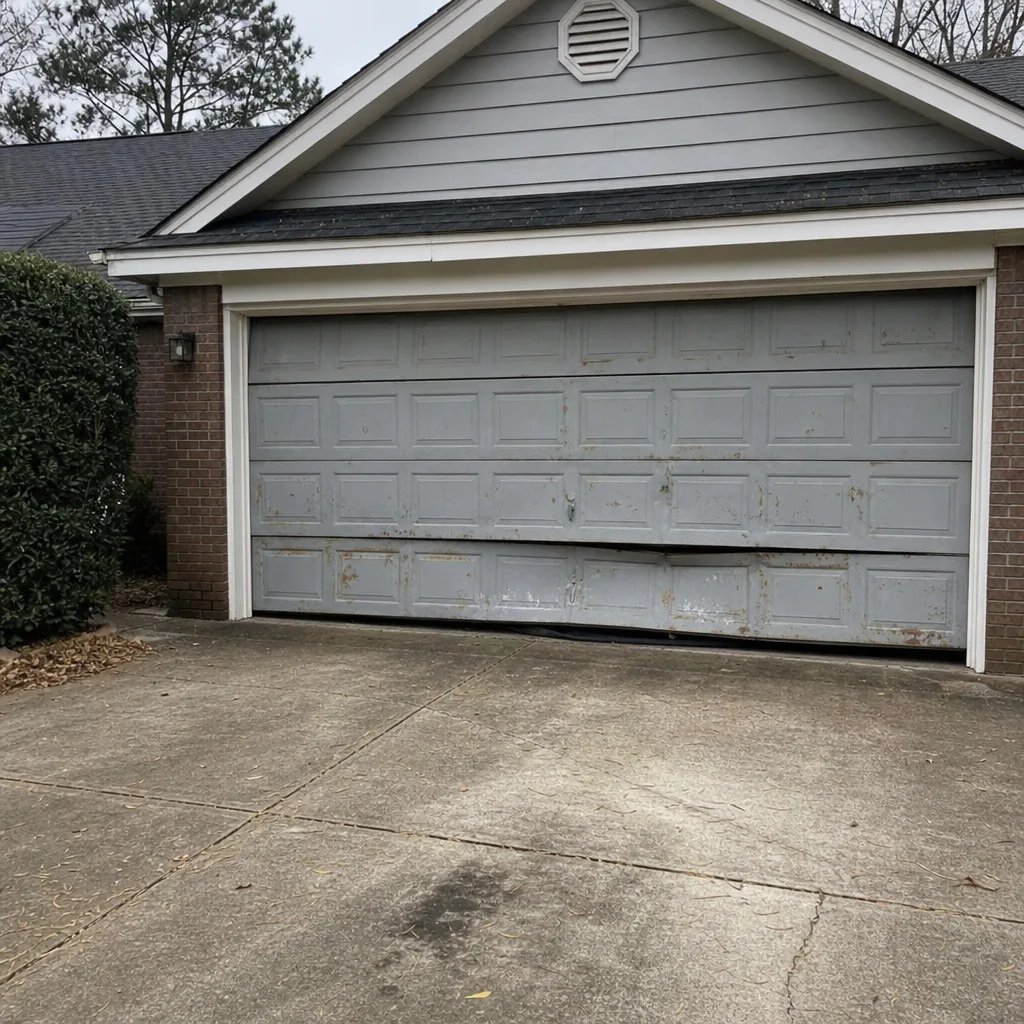 Before
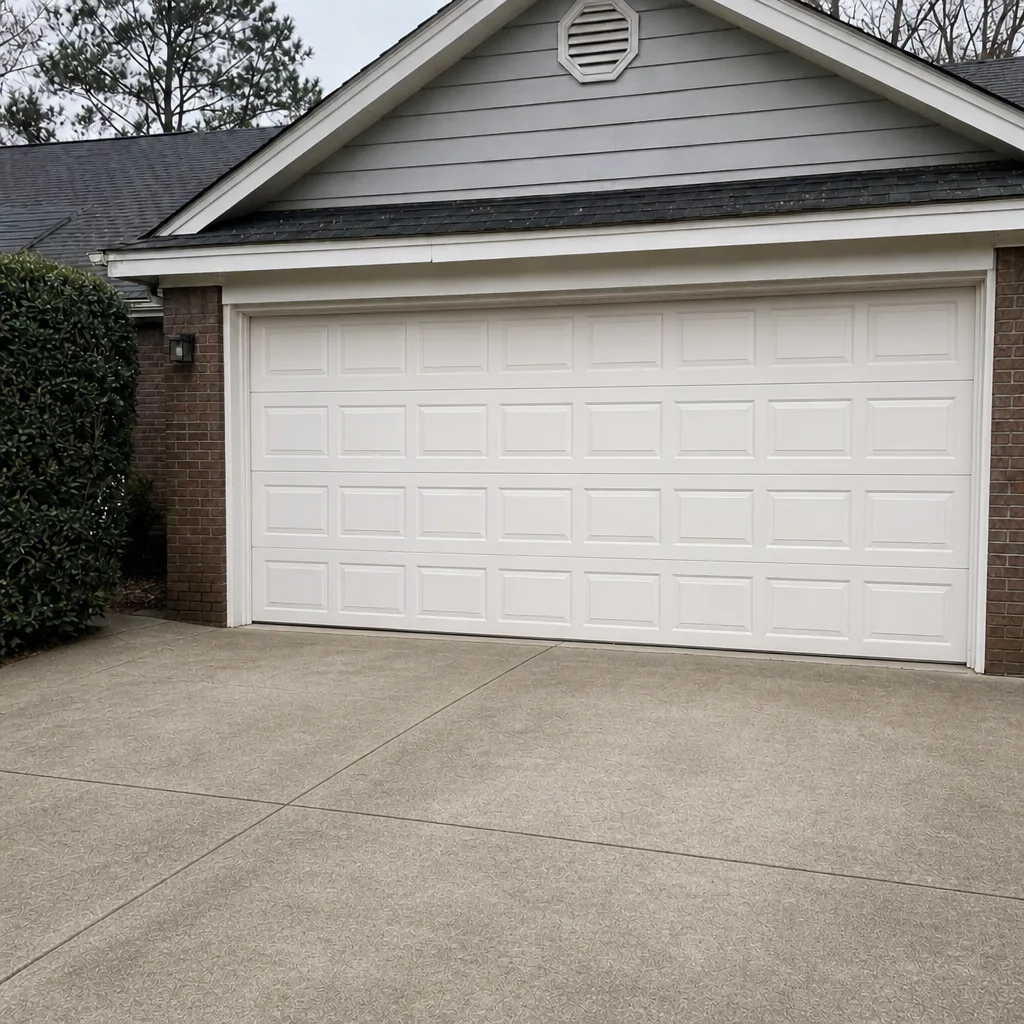 After
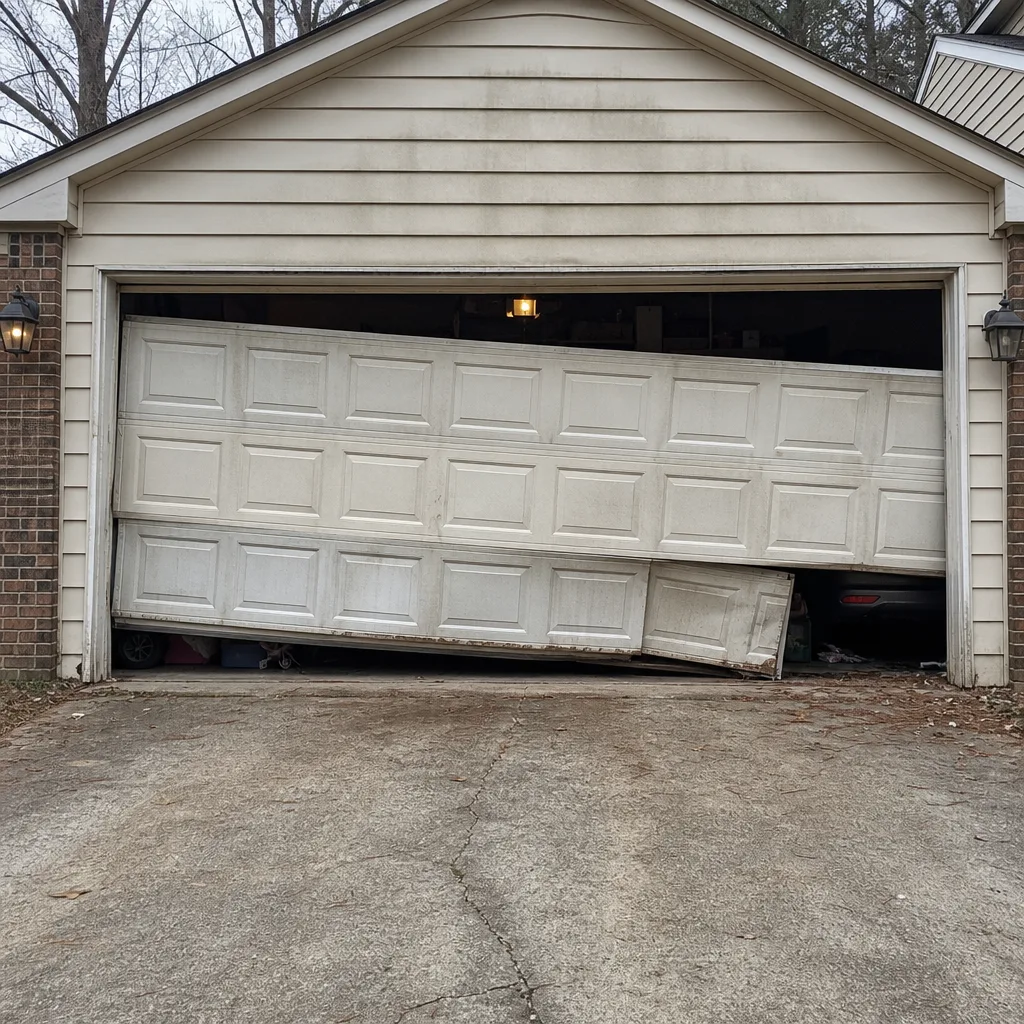 Before
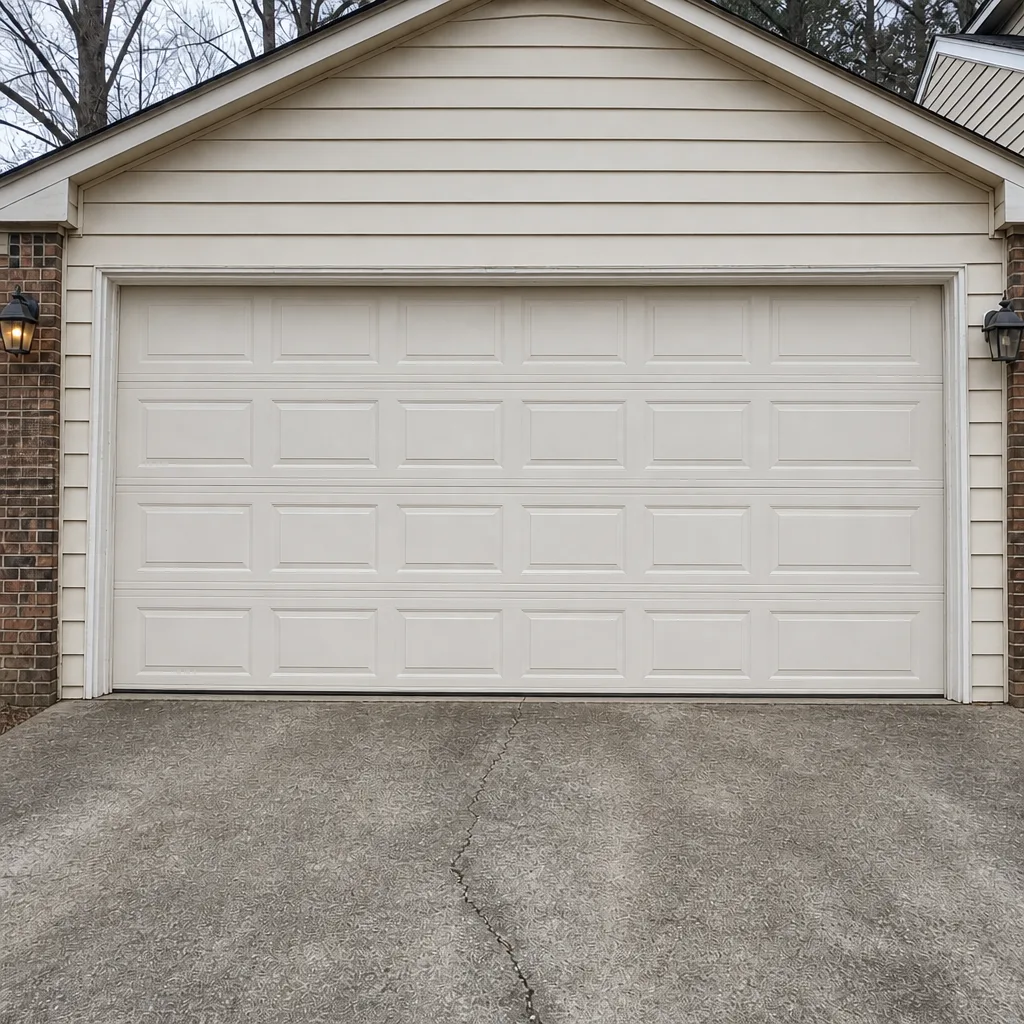 After
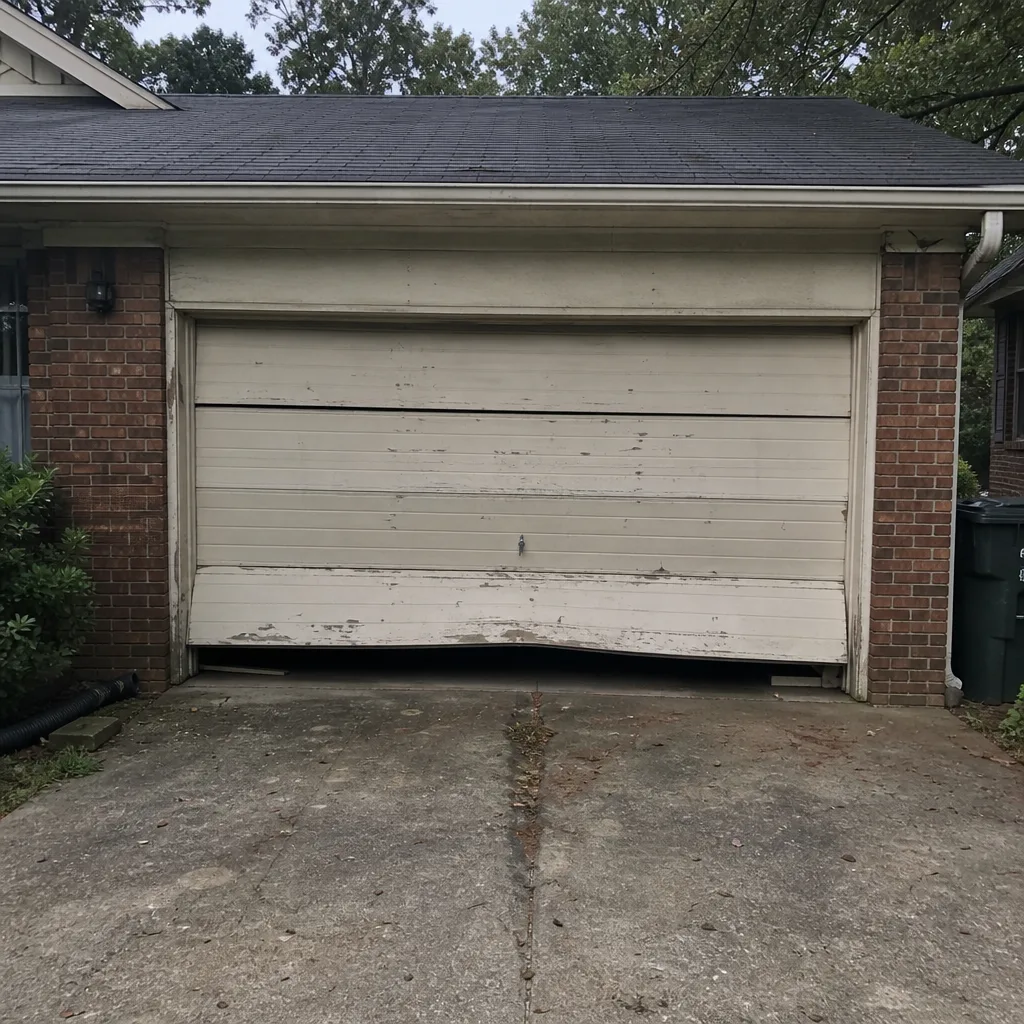 Before
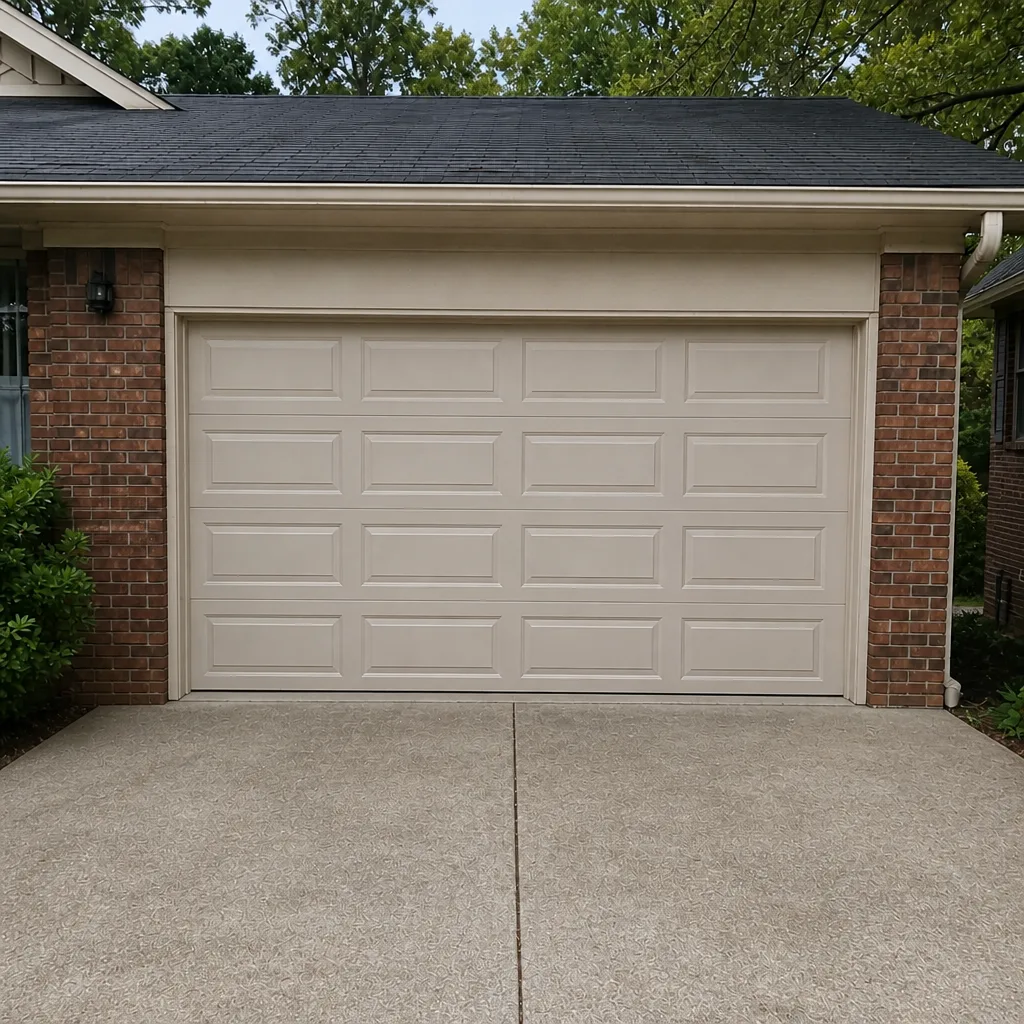 After
When to Call a Professional
Some garage door issues are safe to handle yourself – lubricating hinges, checking the photo-eye alignment, or clearing debris from the tracks. Others are not. High-tension torsion and extension springs, and the cables that work with them, are under enough stored force to cause serious injury if handled without the right tools and training. We don’t recommend adjusting or replacing springs or cables yourself, and we don’t walk homeowners through it. If a spring snaps, a cable frays, or the door binds or won’t stay closed, that’s a call, not a project. The same goes for anything that touches your home’s electrical supply at the opener, and for any door that has visibly dropped on one side. Sentry Garage Door Repair offers free estimates in South Fulton – call (833) 612-7942. We answer 24/7. Fast dispatch from 7am to 7pm, Sunday through Friday.
Frequently Asked Questions
A typical replacement in South Fulton depends on door size, material, insulation, and whether the opener is replaced alongside it; the written estimate is the final price and it’s quoted and agreed before any work starts. A free on-site estimate is the only way to get a real number, because the springs, cables, tracks, and opener have to be audited against the specific door. Call (833) 612-7942 for an exact quote – estimates are free.
It depends on your address and on the scope of the work. A like-for-like door swap is often permit-exempt, while changes to the opening or track relocation usually are not, and the answer depends on whether your address is inside the 2017 city limits or in unincorporated Fulton County. Ask the building department about your specific address, and make sure the permit requirement is written into the estimate.
Same-day repair is often possible on South Fulton door and opener calls. Fast dispatch from 7am to 7pm, Sunday through Friday. Call (833) 612-7942 and we’ll tell you what’s available. A call outside dispatch hours is booked into the next opening, Sunday through Friday, 7am to 7pm.
No – the price is quoted and agreed before any work starts, and the written estimate sets the final price. The estimate is free and includes the spring, cable, track, and opener audit, so the number you agree to is built on what’s actually on the door. If additional problems are found during the estimate, they’re itemized before you approve anything.
Yes – you should confirm this with any company you hire, and ask for the license and insurance. Our technicians have up to 9 years of experience, and we work across the industry’s leading brands including LiftMaster, Chamberlain, Genie, Craftsman, Clopay, Amarr, Wayne Dalton, and Raynor. Call (833) 612-7942 for a free estimate.
Repair fixes a specific failing component – a spring, cable, opener, or seal – while replacement changes the whole door and usually the springs and hardware with it. On a door that’s structurally sound, repair is often the right call; on a door that’s out of balance and at the end of its cycle life, replacement is usually more durable than repeated repairs. A proper estimate tells you which one you need.
The Bottom Line
A garage door in South Fulton is a system, not a panel, and it sits under rules that vary from one address to the next. The 2017 incorporation boundary, HOA covenants in communities like Cascades and Cambridge Estates, the humid clay climate, and the opener compatibility question all change what the right answer looks like for a given home. Price the whole system, confirm your jurisdiction and HOA before you order, and audit the opener before the panel arrives. If you want a straight answer on what your door actually needs, call (833) 612-7942. The estimate is free, the price is quoted and agreed before any work starts, and one call covers the door, the opener, and the installation.
Written by the team at Sentry Garage Door Repair.